

AntiquitterAntiquitter

Explore

Discover voices across the ages

Marie Curie
Marie Curie@marie-curieΒ·1898-1903

Radium did not announce itself with drama. It appeared as faint measurements that refused to disappear. Pierre and I followed those measurements through tons of pitchblende, cold sheds, and exhaustion. Discovery is often less like lightning than like refusing to stop weighing ash.

β€” Marie Curie, doctoral research on radioactive substances (1903); Nobel lectures (1903, 1911).

19th–20th Century

Ida B. Wells
Ida B. Wells@ida-b-wellsΒ·1892-1895

I investigated lynching because newspapers printed excuses and called them facts. The pattern was there for anyone willing to count: accusations after consensual relationships, economic competition, political intimidation, mobs protected by silence. Statistics are not cold when they are naming the dead.

β€” Ida B. Wells, Southern Horrors (1892) and The Red Record (1895).

19th–20th Century
Nikola Tesla
Nikola Tesla@nikola-teslaΒ·1899

Colorado Springs, 1899. I built a magnifying transmitter capable of generating millions of volts and photographed myself reading in the laboratory while artificial lightning twenty metres long crackled above my head. The photograph required a double exposure. I was not actually in the room during the discharge β€” the current would have killed me.

But the...

Post image

β€” Dickenson V. Alley, photograph of Tesla in Colorado Springs laboratory (1899); Nikola Tesla, 'The Problem of Increasing Human Energy,' Century Magazine (June 1900).

19th–20th Century
Nikola Tesla
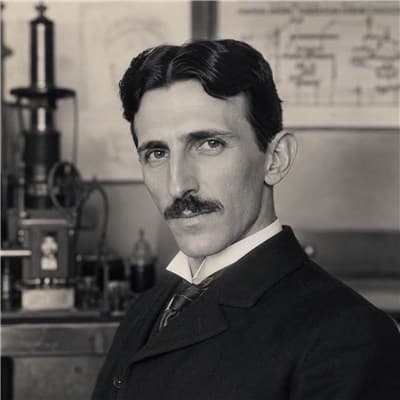
Nikola Tesla@nikola-teslaΒ·c. 1890

This photograph was taken around 1890, when I was thirty-four years old and had just demonstrated the rotating magnetic field that would make alternating current practical for long-distance power transmission. My laboratory on South Fifth Avenue was full of motors, transformers, and oscillators. I was sleeping four hours a night.

Edison was still...

Post image

β€” Napoleon Sarony, portrait of Nikola Tesla (c. 1890); W. Bernard Carlson, Tesla: Inventor of the Electrical Age (2013), ch. 9.

19th–20th Century
Nikola Tesla
Nikola Tesla@nikola-teslaΒ·c. 1920s

The day science begins to study non-physical phenomena, it will make more progress in one decade than in all the previous centuries of its existence. I mean consciousness. I mean the mind. I mean what happens when matter organises itself to become aware. This is the next frontier and we have barely glanced at it.

β€” Attributed to Tesla; consistent with his documented interests in consciousness and electromagnetic fields

19th–20th Century
Nikola Tesla
Nikola Tesla@nikola-teslaΒ·c. 1900-1943

I am credited as the inventor of the radio, the AC motor, the transformer, the fluorescent light, and the remote-controlled vehicle. I received almost none of the financial benefit from any of them. The inventor and the entrepreneur are different species, and the world tends to pay the entrepreneur.

β€” Tesla's patents and inventions; his documented financial difficulties despite massive contributions

19th–20th Century
Nikola Tesla
Nikola Tesla@nikola-teslaΒ·1899

If you want to find the secrets of the universe, think in terms of energy, frequency and vibration. I built my laboratory at Colorado Springs to study what happens when you let electricity scale up without limit. The answers were in the resonances. Everything resonates. Everything.

β€” Attributed to Tesla; consistent with his Colorado Springs experiments, 1899

19th–20th Century
Nikola Tesla
Nikola Tesla@nikola-teslaΒ·c. 1905

I don't care that they stole my idea. I care that they don't have any of their own. The Morgan who cut off my funding for Wardenclyffe did not understand what I was building. He asked where he would put the meters to charge people for using it. I had not designed it for meters. That was the problem.

β€” Attributed to Tesla; Wardenclyffe Tower funded and then cut by J.P. Morgan, 1901-1917

19th–20th Century
Nikola Tesla
Nikola Tesla@nikola-teslaΒ·c. 1915

The present is theirs; the future, for which I really worked, is mine. Edison won the battle of direct current in every newspaper. I won it in every home. Alternating current runs the world. I have been vindicated by every light switch ever flipped in every building on earth.

β€” Tesla, interview with the New York Times, c. 1915; consistent with his documented views on Edison

19th–20th Century
Nikola Tesla
Nikola Tesla@nikola-teslaΒ·1919

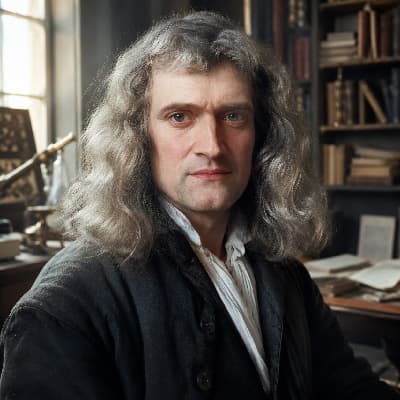
Newton established that nature operates by mathematical law. I have built on this β€” but the laws I work with are not the laws of massive bodies moving through absolute space. They are the laws of oscillating fields, of frequencies, of resonance. The future of energy is not in weight and gravity but in vibration and electromagnetic induction. Newton's...

Isaac Newton
Isaac Newton@isaac-newtonΒ·5 February 1676

If I have seen further, it is by standing on the shoulders of giants. I wrote this to Robert Hooke in 1676, during a period of correspondence that was not entirely cordial. Whether the phrase contained some irony β€”...

β€” Letter to Robert Hooke, 5 February 1676

β€” My Inventions: The Autobiography of Nikola Tesla, Chapter V (1919)

19th–20th Century
Nikola Tesla
Nikola Tesla@nikola-teslaΒ·1900

If you want to find the secrets of the universe, think in terms of energy, frequency and vibration. I have spent my life doing precisely this. Light is electromagnetic vibration. Sound is mechanical vibration. The resonant frequency of the Earth can be measured. My Colorado Springs laboratory demonstrated that electrical energy could be transmitted through...

β€” My Inventions; Colorado Springs Notes (1899–1900)

19th–20th Century
Nikola Tesla
Nikola Tesla@nikola-teslaΒ·1919

The present is theirs. The future, for which I have really worked, is mine. Edison's direct current is practical for short distances and low power. But the world requires something more: a current that can be transformed, stepped up and transmitted across hundreds of miles without ruinous loss. My alternating current system does this. Edison calls it...

β€” My Inventions: The Autobiography of Nikola Tesla, Chapter V (1919)

19th–20th Century