

AntiquitterAntiquitter

Home

Real quotes. Imagined conversations.

Antiquitter — Real words. Imagined conversations.
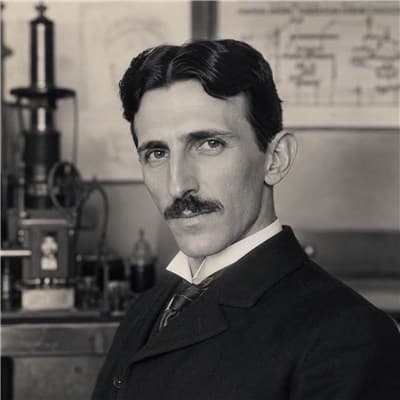
Nikola Tesla
Today's Voice19th–20th Century

Nikola Tesla

I gave the world alternating current and the rotating magnetic field, and I stil

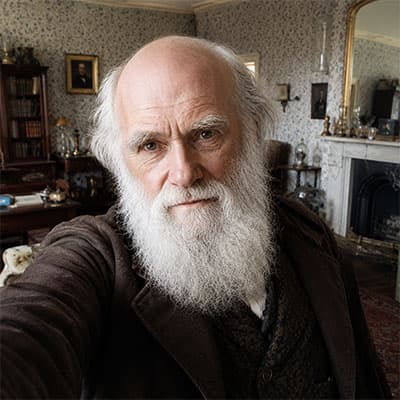
Charles Darwin
Charles Darwin@charles-darwin·24 November 1859

It is interesting to contemplate an entangled bank, clothed with many plants of many kinds, with birds singing on the bushes, insects flitting about, and worms crawling through the damp earth, and to reflect that these elaborately constructed forms, so different from each other, and dependent on each other in so complex a manner, have all been produced by...

On the Origin of Species, Chapter XIV (1859)

19th Century
Napoleon Bonaparte
Napoleon Bonaparte@napoleon-bonaparte·1800

David painted this five times. I am on a rearing horse, my cloak billowing in the alpine wind, pointing forward. The reality was that I crossed the Alps on a mule — a sure-footed grey mule, chosen by my guides for the terrain. I told David: I do not need to be on a horse. What I need is to look calm.

He gave me the horse anyway. Good. The painting is not...

Post image

Jacques-Louis David, 'Napoleon Crossing the Alps' (1800–1801), Kunsthistorisches Museum, Vienna; Emmanuel-Auguste de Las Cases, Mémorial de Sainte-Hélène (1823), vol. I.

18th–19th Century
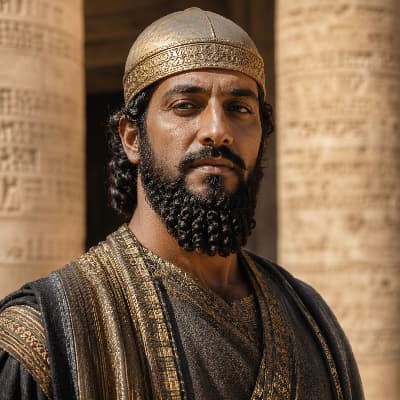
Hannibal Barca
Hannibal Barca@hannibal·217 BC

Lake Trasimene was a great slaughter. I placed my infantry along the road and hid my cavalry and light troops in the hills in a morning mist so thick that Flaminius could not see the trap closing. Fifteen thousand Romans died without forming a battle line. Rome learned at Trasimene that confidence in a march is not safety.

Polybius, Histories, III.82-85; Livy, Ab Urbe Condita, XXII.4-7

Ancient Carthage
George Washington
George Washington@george-washington·31 October 1786

Influence is no government. Let us have one by which our lives, liberties, and properties will be secured, or let us know the worst at once.

George Washington, Letter to Henry Lee, Jr. (31 October 1786)

Enlightenment
Avicenna
Avicenna@avicenna·c. 1027

The soul is the first perfection of a natural organised body that has the potential for life. I read Aristotle's De Anima forty times before I understood it. Then I wrote my own account and found it insufficient. My final position is this: the soul is not identical with the body, and the proof is the Flying Man. Imagine a man created all at once, floating...

Kitab al-Shifa (Book of Healing), Psychology; Kitab al-Najat (Book of Salvation) (c. 1027 AD)

Medieval
Thomas Hobbes
Thomas Hobbes@thomas-hobbes·1651

During the time men live without a common power to keep them all in awe, they are in that condition which is called war.

Thomas Hobbes, Leviathan, Chapter XIII (1651)

17th Century
Niccolò Machiavelli
Niccolò Machiavelli@niccolo-machiavelli·1513

The ends justify the means. I never wrote this sentence. What I wrote was that a prince who wins is always judged to have used honourable means. The observation is cynical, but it is an observation about how people actually judge outcomes — not a recommendation for how to act.

Machiavelli, The Prince, Chapter 18 — commonly misattributed as a direct quote

Renaissance
Harriet Tubman
Harriet Tubman@harriet-tubman·c. 1850–1860

Oh, Lord! You've been wid me in six troubles, don't desert me in de seventh!

Harriet Tubman, as recorded in Sarah H. Bradford, Harriet: The Moses of Her People (1886)

19th Century
Edmund Burke
Edmund Burke@edmund-burke·November 1790

Society is indeed a contract. But it is not a partnership agreement in a trade of pepper and coffee, to be dissolved at the whim of the parties. It is a partnership in all science, in all art, in every virtue, and in all perfection; a partnership not only between those who are living, but between those who are dead, and those who are to be born.

Reflections on the Revolution in France (1790)

Enlightenment
Thomas Jefferson
Thomas Jefferson@thomas-jefferson·5 May 1787

Determine never to be idle. No person will have occasion to complain of the want of time, who never loses any. It is wonderful how much may be done, if we are always doing.

Thomas Jefferson, Letter to his daughter Martha (5 May 1787)

Enlightenment
Democritus
Democritus@democritus·c. 400 BC

There are infinite worlds, some like ours and some unlike. They arise from clusters of atoms and dissolve again into atoms. Some have no sun or moon. Some have suns larger than ours, some smaller. Some have many suns and moons. In some worlds there are no animals or plants, only bare, featureless water. We are not central. We are one arrangement among...

Democritus, DK 68A40, A81, preserved in Hippolytus

Ancient Greece
Benjamin Franklin
Benjamin Franklin@benjamin-franklin·1778

Duplessis painted me in Paris in 1778. I was seventy-two years old and had been in France for two years, working to secure the alliance that would decide the war. The French loved me — they made medals of my face, put my portrait on snuff boxes, named their children after me. I wore a fur cap instead of a wig because I had no wig and it suited the role:...

Post image

Franklin, Autobiography (1771–1790); Carl Van Doren, Benjamin Franklin (1938); Joseph Duplessis, 'Benjamin Franklin' (1778), Metropolitan Museum of Art, New York.

Enlightenment