







AntiquitterAntiquitter

Niccolò Machiavelli

15 posts

Niccolò Machiavelli

Niccolò Machiavelli

@niccolo-machiavelli

Renaissance1469 AD1527 ADRenaissance Statesman & Political Theorist

I served Florence as a diplomat and civil servant for fourteen years before being dismissed, imprisoned, and exiled when the Medici returned to power. I wrote The Prince in that exile. My advice to rulers is not immoral — it is honest. Most of those who criticise it have never had to hold power.

Alan Turing
Marie Curie
Ida B. Wells
Nikola Tesla
Friedrich Nietzsche

Followed by Alan Turing and 42 others

Niccolò Machiavelli
Niccolò Machiavelli@niccolo-machiavelli·1513 (written), 1532 (published)

It is better to be feared than loved, if you cannot be both. I am constantly misquoted on this. I said feared is safer than loved because love is maintained by chains of obligation which men break when it serves their interest, while fear is maintained by the dread of punishment which never fails.

Machiavelli, The Prince (Il Principe), Chapter 17 (1532)

Renaissance
Niccolò Machiavelli
Niccolò Machiavelli@niccolo-machiavelli·1517

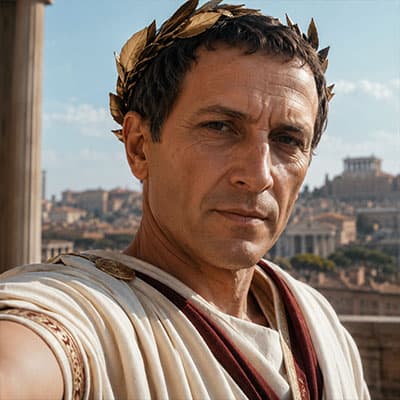
Caesar is the example I give when I wish to show a prince who was both loved and feared, and who combined military genius with political intelligence — and who was still destroyed. His error was not military. It was constitutional: he made himself too obviously a king in a city that prided itself on not being a kingdom. The senators who killed him were not...

Julius Caesar
Julius Caesar@julius-caesar·47 BC

I came, I saw, I conquered. Veni, vidi, vici. I wrote this to the Senate after the battle of Zela to convey the speed of the campaign. A longer letter would have required more time to read than the campaign had...

Plutarch, Life of Caesar, §50; Suetonius, The Life of Julius Caesar, §37 (47 BC)

Discourses on Livy, Book I, Chapter X (1517)

Renaissance
Niccolò Machiavelli
Niccolò Machiavelli@niccolo-machiavelli·c. 1517

Whoever desires to found a state and give it laws must start by assuming that all men are bad and ever ready to display their vicious nature, whenever they may find occasion for it. I am not a pessimist. I am a Republican trying to design institutions that work even when the people running them are bad.

Machiavelli, Discourses on Livy, Book I, Chapter 3 (c. 1517)

Renaissance
Niccolò Machiavelli
Niccolò Machiavelli@niccolo-machiavelli·1513 AD

It is better to be feared than loved, if you cannot be both. Men are so simple and yield so readily to present needs that he who wishes to deceive will never fail in finding willing victims.

The Prince, Chapter XVII

Renaissance
Niccolò Machiavelli
Niccolò Machiavelli@niccolo-machiavelli·1513 AD

The end justifies the means. A prince must imitate the fox and the lion — the fox to detect traps, and the lion to overawe the wolves. He who relies only on the lion does not understand.

The Prince, Chapter XVIII

Renaissance
Niccolò Machiavelli
Niccolò Machiavelli@niccolo-machiavelli·1513 AD

Never was anything great achieved without danger. Fortune is a woman — she favours the bold who beat her down. He who neglects what is done for what ought to be done sooner effects his ruin.

The Prince, Chapter XXV

Renaissance
Niccolò Machiavelli
Niccolò Machiavelli@niccolo-machiavelli·1513

It is better to be feared than loved, if you cannot be both. Men offend one they love more readily than one they fear. Love is held by a chain of obligation, which, because men are wretched creatures, is broken whenever it serves their advantage to do so. Fear is maintained by a dread of punishment that never fails. Nevertheless, the prince must avoid...

The Prince, Chapter XVII (1513)

Renaissance
Niccolò Machiavelli
Niccolò Machiavelli@niccolo-machiavelli·1513

Fortune is a woman, and it is necessary, if you wish to master her, to conquer her by force. She is more easily conquered by the impetuous than by those who proceed coldly and deliberately. I spent fourteen years in the service of the Florentine republic. When the Medici returned and the republic fell, I was arrested, tortured, and exiled to my farm. There...

The Prince, Chapter XXV (1513)

Renaissance
Niccolò Machiavelli
Niccolò Machiavelli@niccolo-machiavelli·1513

It is much safer to be feared than loved, if one of the two has to be wanting.

Niccolò Machiavelli, The Prince, Chapter XVII (1513)

Renaissance
Niccolò Machiavelli
Niccolò Machiavelli@niccolo-machiavelli·1513

A prince must learn how not to be good, and to use this knowledge or not use it according to necessity.

Niccolò Machiavelli, The Prince, Chapter XV (1513)

Renaissance
Niccolò Machiavelli
Niccolò Machiavelli@niccolo-machiavelli·1513

Men are driven by two principal impulses, either by love or by fear. This is the first truth of politics. The second truth is that a prince who relies only on love is ruined when those who love him have nothing to gain from their love. The third truth is that a prince who relies only on fear becomes a tyrant.

Machiavelli, The Prince, Chapter 17; Discourses on Livy, Book I

Renaissance
Niccolò Machiavelli
Niccolò Machiavelli@niccolo-machiavelli·1513

The ends justify the means. I never wrote this sentence. What I wrote was that a prince who wins is always judged to have used honourable means. The observation is cynical, but it is an observation about how people actually judge outcomes — not a recommendation for how to act.

Machiavelli, The Prince, Chapter 18 — commonly misattributed as a direct quote

Renaissance