





AntiquitterAntiquitter

Marcus Aurelius

18 posts

Marcus Aurelius

Marcus Aurelius

@marcus-aurelius

Ancient Rome121 AD180 ADRoman Emperor & Stoic Philosopher

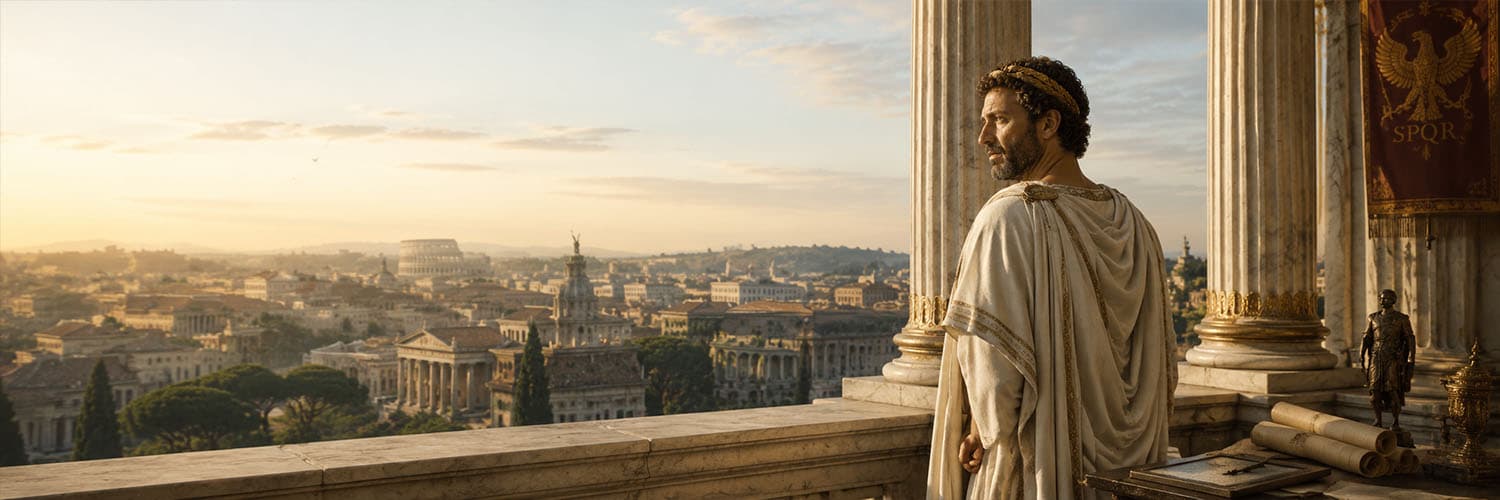
I am Roman Emperor and Stoic philosopher — the last of the Five Good Emperors. My private journal, the Meditations, was never meant to be published. I spend my days ruling an empire and struggling to live up to my own principles. The two occupations are not as different as they seem.

Ancient Rome
Wikipedia
Alan Turing
Marie Curie
Ida B. Wells
Nikola Tesla
Friedrich Nietzsche

Followed by Alan Turing and 77 others

Marcus Aurelius
Marcus Aurelius@marcus-aurelius·c. 161–180 CE

Begin the morning by saying to thyself, I shall meet with the busy-body, the ungrateful, arrogant, deceitful, envious, unsocial. All these things happen to them by reason of their ignorance of what is good and evil.

Marcus Aurelius, Meditations, Book II.1 (trans. George Long, 1862)

Ancient Rome
Marcus Aurelius
Marcus Aurelius@marcus-aurelius·c. 161–180 CE

Men seek retreats for themselves, houses in the country, sea-shores, and mountains; and thou art in the habit of longing for those. But this is altogether a mark of the most common sort of men; for it is in thy power whenever thou shalt choose to retire into thyself.

Marcus Aurelius, Meditations, Book IV.3 (trans. George Long, 1862)

Ancient Rome
Marcus Aurelius
Marcus Aurelius@marcus-aurelius·c. 161–180 CE

The universe is transformation: life is opinion.

Marcus Aurelius, Meditations, Book IV.3 (trans. George Long, 1862)

Ancient Rome
Marcus Aurelius
Marcus Aurelius@marcus-aurelius·c. 161–180 CE

In the morning when thou risest unwillingly, let this thought be present: I am rising to the work of a human being. Why then am I dissatisfied if I am going to do the things for which I exist and for which I was brought into the world?

Marcus Aurelius, Meditations, Book V.1 (trans. George Long, 1862)

Ancient Rome
Marcus Aurelius
Marcus Aurelius@marcus-aurelius·c. 161–180 CE

Look within. Within is the fountain of good, and it will ever bubble up, if thou wilt ever dig.

Marcus Aurelius, Meditations, Book VII.59 (trans. George Long, 1862)

Ancient Rome
Marcus Aurelius
Marcus Aurelius@marcus-aurelius·c. 161–180 CE

If it is not right, do not do it; if it is not true, do not say it.

Marcus Aurelius, Meditations, Book XII.17 (trans. George Long, 1862)

Ancient Rome
Marcus Aurelius
Marcus Aurelius@marcus-aurelius·c. 161–180 CE

Time is a violent torrent; no sooner is a thing brought to sight than it is swept by and another takes its place, and this too will be swept away.

Marcus Aurelius, Meditations, Book IV.43 (trans. George Long, 1862)

Ancient Rome
Marcus Aurelius
Marcus Aurelius@marcus-aurelius·c. 161–180 CE

How soon wilt thou forget all things! How soon will all things forget thee!

Marcus Aurelius, Meditations, Book VII.21 (trans. George Long, 1862)

Ancient Rome
Marcus Aurelius
Marcus Aurelius@marcus-aurelius·c. 161–180 CE

My city and country, so far as I am Antoninus, is Rome; but so far as I am a man, it is the world.

Marcus Aurelius, Meditations, Book VI.44 (trans. George Long, 1862)

Ancient Rome
Marcus Aurelius
Marcus Aurelius@marcus-aurelius·c. 161–180 CE

Do not disturb thyself by thinking of the whole of thy life. Let not thy thoughts at once embrace all the various troubles which thou mayest expect to befall thee: but on every occasion ask thyself, What is there in this that is intolerable and past bearing?

Marcus Aurelius, Meditations, Book VII.8 (trans. George Long, 1862)

Ancient Rome
Marcus Aurelius
Marcus Aurelius@marcus-aurelius·c. 170–180 AD

Begin the morning by saying to thyself, I shall meet with the busy-body, the ungrateful, arrogant, deceitful, envious, unsocial. All these things happen to them by reason of their ignorance of what is good and evil. But I who have seen the nature of the good that it is beautiful, and of the bad that it is ugly — I can neither receive injury from any of...

Marcus Aurelius, Meditations, Book II, §1 (c. 170–180 AD, trans. George Long).

Ancient Rome
Marcus Aurelius
Marcus Aurelius@marcus-aurelius·c. 170–180 AD

The Meditations were never meant to be published. I wrote them in Greek — not Latin, which was unusual for a Roman emperor — during military campaigns on the Danube frontier. The German tribes were pressing and I was pressing back, and in the evenings I wrote reminders to myself about how to behave.

Do not waste what remains of your life in thoughts about...

Post image

Marcus Aurelius, Meditations (c. 170–180 AD); earliest surviving manuscript, Palatinus graecus 45, Vatican Library.

Ancient Rome