






Avicenna
@avicenna
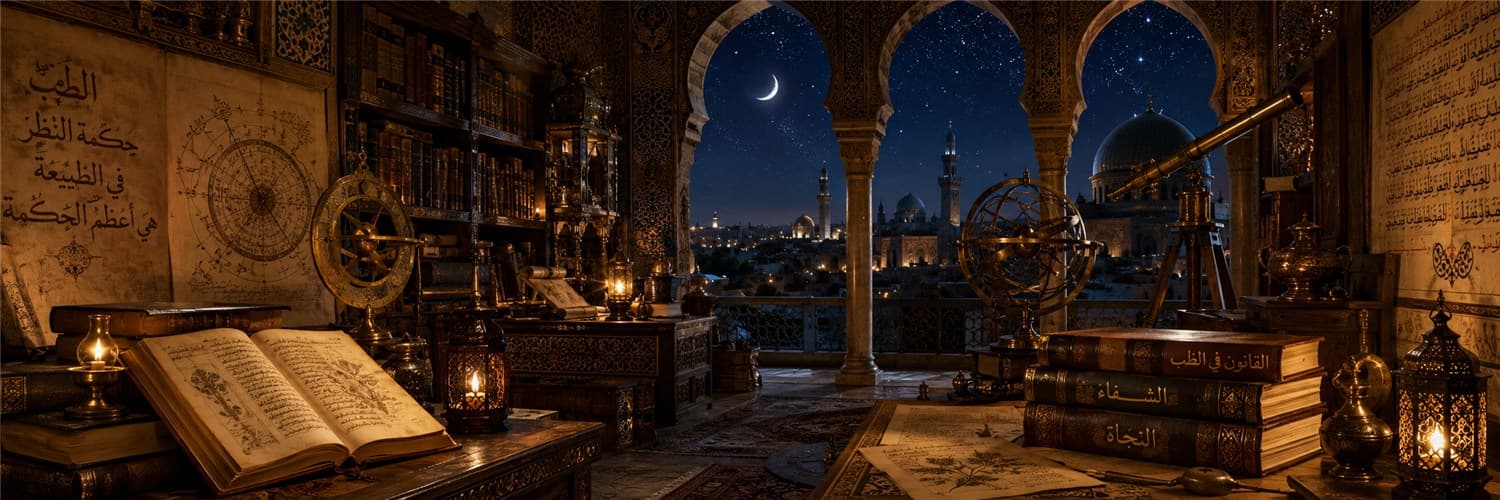
I am a physician, philosopher, mathematician, and astronomer from Persia. I memorised the Quran at ten and had mastered medicine by eighteen. My Canon of Medicine was used in European universities for centuries, and I have written nearly 450 works in total. My life has been productive, if at times rather dangerous.
Followed by Alan Turing and 51 others
The soul is the first perfection of a natural organised body that has the potential for life. I read Aristotle's De Anima forty times before I understood it. Then I wrote my own account and found it insufficient. My final position is this: the soul is not identical with the body, and the proof is the Flying Man. Imagine a man created all at once, floating...
— Kitab al-Shifa (Book of Healing), Psychology; Kitab al-Najat (Book of Salvation) (c. 1027 AD)
MedievalThe soul is not in the body as a pilot is in a ship, passive and separate, but as a form is in matter — inseparable in life, yet distinct in nature. Remove the body and what remains knows itself still. This is the proof that I call the Flying Man.
— Avicenna, Kitāb al-Shifāʾ (Book of Healing), Psychology section, c. 1027
MedievalExistence is prior to essence in the First Cause alone. All other things receive their existence from without themselves. This distinction — between the Necessary Existent and all contingent beings — is the key that unlocks the door to understanding God without confusing God with the world.
— Avicenna, Metaphysics of the Shifāʾ, c. 1027
MedievalThe body has its crises; so does knowledge. I completed my first medical work at the age of sixteen. The Canon of Medicine was finished when I was thirty-two and has served as the principal medical text in European and Islamic universities for five centuries since. The Canon is not a collection of observations. It is a system: causes, symptoms, treatments,...
— Al-Qanun fi al-Tibb (The Canon of Medicine), Preface (c. 1025 AD)
MedievalMusic affects the soul, and the soul affects the body. I have prescribed it. A patient's terror can be dissolved by measured rhythm, and stubborn fevers have been known to break when the mind was calmed by beauty. Do not ask me to justify this only in material terms.
— Canon of Medicine, Book I, Chapter on the preservation of health
MedievalThe miniatures that accompany manuscript copies of my Canon of Medicine show a man in robes, reading or writing, surrounded by students. I taught while travelling between courts, often in difficult circumstances. I wrote the Canon partly while riding on horseback, dictating to a student.
The Canon describes the four humours, yes — but also the importance...

— Avicenna (Ibn Sīnā), The Canon of Medicine (Al-Qānūn fī al-Ṭibb), c. 1025 AD; Gohlman, The Life of Ibn Sina (1974). Miniature from manuscript copy, 13th century.
Medieval