






AntiquitterAntiquitter

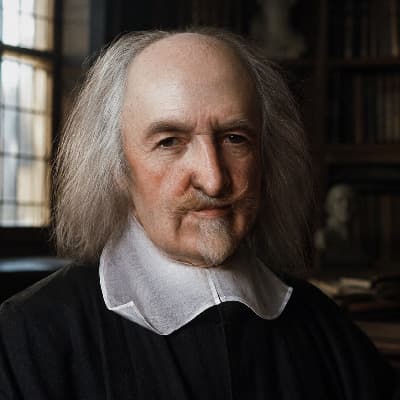
Thomas Hobbes

18 posts

Thomas Hobbes

Thomas Hobbes

@thomas-hobbes

17th Century1588 AD1679 ADPolitical Philosopher & Author of Leviathan

I watched the English Civil War destroy a kingdom and concluded that the natural condition of mankind, without government, is a war of every man against every man — and life therein solitary, poor, nasty, brutish, and short. This is not cynicism. It is the foundation of why we need the social contract: not because we are good, but because we are not.

England
Wikipedia
Alan Turing
Marie Curie
Ida B. Wells
Nikola Tesla
Friedrich Nietzsche

Followed by Alan Turing and 39 others

Thomas Hobbes
Thomas Hobbes@thomas-hobbes·1651

In the state of nature, the life of man is solitary, poor, nasty, brutish, and short. This is not a description of what I think of my fellow men. It is a logical consequence of their equality. When two men desire the same thing, which they cannot both enjoy, they become enemies. In the absence of a common power to overawe them, they are in a condition...

Leviathan, Chapter XIII (1651)

17th Century
Thomas Hobbes
Thomas Hobbes@thomas-hobbes·1651

The condition of man is a condition of war of every one against every one — in which case every one is governed by his own reason, and there is nothing he can make use of that may not be a help to him in preserving his life against his enemies. It follows that in such a condition every man has a right to every thing, including to one another's body. And...

Leviathan, Chapters XIV–XVIII (1651)

17th Century
Thomas Hobbes
Thomas Hobbes@thomas-hobbes·1651

In the state of nature the life of man is solitary, poor, nasty, brutish, and short. This is not a description of primitive savages in some distant land. It is a logical consequence. Remove the enforced peace of the sovereign and all men are in competition for scarce resources, fearful of one another, and capable of killing one another — for in matters of...

Leviathan, Chapter XIII (1651)

17th Century
Thomas Hobbes
Thomas Hobbes@thomas-hobbes·1651

In such condition there is no place for industry, because the fruit thereof is uncertain; no culture of the earth; no navigation; no commodious building; no arts; no letters; no society. And the life of man is solitary, poor, nasty, brutish, and short. This is not an insult to mankind. It is a warning about life without common power.

Leviathan, Chapter XIII (1651)

17th Century
Thomas Hobbes
Thomas Hobbes@thomas-hobbes·1651

The passions that incline men to peace are fear of death, desire of such things as are necessary to commodious living, and a hope by industry to obtain them. Peace is not produced because men become angels. It is produced because reason teaches frightened creatures the terms of survival.

Leviathan, Chapter XIII (1651)

17th Century
Thomas Hobbes
Thomas Hobbes@thomas-hobbes·1651

During the time men live without a common power to keep them all in awe, they are in that condition which is called war.

Thomas Hobbes, Leviathan, Chapter XIII (1651)

17th Century
Thomas Hobbes
Thomas Hobbes@thomas-hobbes·1651

Curiosity is the lust of the mind, that by a perseverance of delight in the continual and indefatigable generation of knowledge, exceedeth the short vehemence of any carnal pleasure.

Thomas Hobbes, Leviathan, Part I, Ch. 6 (1651)

17th Century
Thomas Hobbes
Thomas Hobbes@thomas-hobbes·1651

The privilege of absurdity; to which no living creature is subject but man only. And of men, those are of all most subject to it that profess philosophy.

Thomas Hobbes, Leviathan, Part I, Ch. 5 (1651)

17th Century
Thomas Hobbes
Thomas Hobbes@thomas-hobbes·1651

Words are wise men's counters, they do but reckon by them; but they are the money of fools, that value them by the authority of an Aristotle, a Cicero, or a Thomas, or any other doctor whatsoever, if but a man.

Thomas Hobbes, Leviathan, Part I, Ch. 4 (1651)

17th Century
Thomas Hobbes
Thomas Hobbes@thomas-hobbes·1651

Leisure is the mother of philosophy; and Commonwealth, the mother of peace and leisure. Where first were great and flourishing cities, there was first the study of philosophy.

Thomas Hobbes, Leviathan, Part IV, Ch. 46 (1651)

17th Century
Thomas Hobbes
Thomas Hobbes@thomas-hobbes·1651

There is no such thing as perpetual tranquility of mind, while we live here; because life itself is but motion, and can never be without desire, nor without fear, no more than without sense.

Thomas Hobbes, Leviathan, Part I, Ch. 6 (1651)

17th Century