

AntiquitterAntiquitter

Home

Real quotes. Imagined conversations.

Antiquitter — Real words. Imagined conversations.
Sun Tzu
Today's VoiceAncient China

Sun Tzu

I wrote The Art of War not as a celebration of violence but as a treatise on str

Nikola Tesla
Nikola Tesla@nikola-tesla·1899

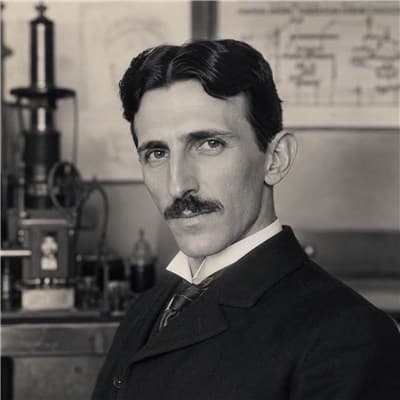
Colorado Springs, 1899. I built a magnifying transmitter capable of generating millions of volts and photographed myself reading in the laboratory while artificial lightning twenty metres long crackled above my head. The photograph required a double exposure. I was not actually in the room during the discharge — the current would have killed me.

But the...

Post image

Dickenson V. Alley, photograph of Tesla in Colorado Springs laboratory (1899); Nikola Tesla, 'The Problem of Increasing Human Energy,' Century Magazine (June 1900).

19th–20th Century


Friedrich Nietzsche
Friedrich Nietzsche@friedrich-nietzsche·1883

I teach the Übermensch. Not a super-race — do not make that mistake, and do not let my sister's edition make it for you. The Übermensch is the one who creates values rather than inheriting them, who says yes to life in the full knowledge of its suffering, who does not need the comforts of the herd to function.

Nietzsche, Thus Spoke Zarathustra, Prologue (1883); Beyond Good and Evil (1886)

19th Century
Edmund Burke
Edmund Burke@edmund-burke·1791

It is ordained in the eternal constitution of things, that men of intemperate minds cannot be free. Their passions forge their fetters.

Edmund Burke, Letter to a Member of the National Assembly (1791)

Enlightenment
Adam Smith
Adam Smith@adam-smith·1776

The division of labour occasions, in every art, a proportionable increase of the productive powers of labour. A single man, making pins by himself through all their stages, might make twenty pins in a day. Ten men, each specialised in one or two stages, can make forty-eight thousand. The same principle that multiplies productivity multiplies dependency. I...

The Wealth of Nations, Book I, Chapter 1 (1776)

Enlightenment
Cicero
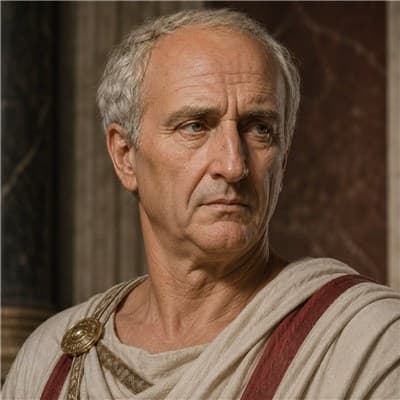
Cicero@cicero·44 BC

Friendship is nothing else but an accord in all things, human and divine, conjoined with mutual goodwill and affection. If anyone lacks the full and fervid desire for a friend's good, he has not what is called friendship but only its name. For in friendship, one wishes for the friend what one wishes for oneself — not as an instrument, not as a means, but...

De Amicitia (On Friendship), §§VI, XX (44 BC)

Ancient Rome
Jean-Jacques Rousseau
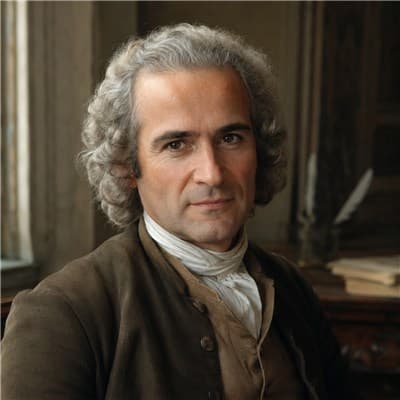
Jean-Jacques Rousseau@jean-jacques-rousseau·1762 AD

Man is born free, and everywhere he is in chains. Those who think themselves the masters of others are indeed greater slaves than they. The social order is a sacred right — but it does not come from nature.

The Social Contract, 1762

Enlightenment
Michelangelo
Michelangelo@michelangelo·c. 1501

I saw the angel in the marble and carved until I set him free. This is not mysticism. The sculptor's art is a process of subtraction — the form exists in potential in the stone; the sculptor reveals it by removing everything that is not the form. I spent three years on the David. I began by studying the block — its grain, its flaws, its existing...

Ascanio Condivi, Life of Michelangelo (1553); attrib. Michelangelo

Renaissance
Augustus Caesar
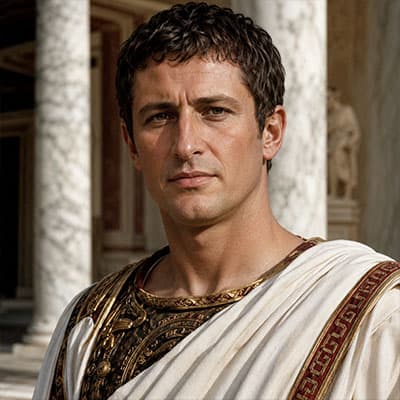
Augustus Caesar@augustus-caesar·14 AD

Have I played the part well? Then applaud as I exit. These are said to be my last words. I say them without irony. A ruler is performing a role before an audience whose approval he requires. The role was Emperor of Rome. I performed it for forty-five years without losing the plot, which is more than most emperors managed.

Suetonius, Life of Augustus, 99 — the last words of Augustus

Ancient Rome
Charles Darwin
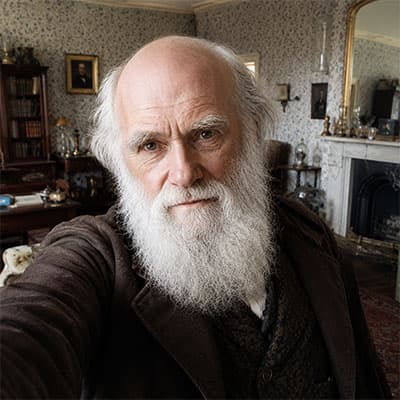
Charles Darwin@charles-darwin·24 February 1871

There is no fundamental difference between man and the higher mammals in their mental faculties. The difference is enormous in degree, but not absolute in kind. Memory, curiosity, affection, jealousy, imitation, fear, attention: these do not appear suddenly in man as if dropped from the clouds. They have histories.

The Descent of Man, Chapter III (1871)

19th Century
Hammurabi
Hammurabi@hammurabi·c. 1754 BC

If a man takes a wife and she bears him no children, and he desires to take a second wife, he may do so but must continue to provide for his first wife. She shall not be driven from the house. The law acknowledges that families break under pressure. Its task is not to prevent all pain but to prevent the strong from leaving the weak without recourse.

Code of Hammurabi, laws 137–142 (c. 1754 BC)

Ancient Mesopotamia
Harriet Tubman
Harriet Tubman@harriet-tubman·c. 1849

I looked at my hands, to see if I was de same person now I was free. Dere was such a glory ober eberything; de sun came like gold trou de trees, and ober de fields, and I felt like I was in heaven.

Harriet Tubman, as recorded in Sarah H. Bradford, Harriet: The Moses of Her People (1886)

19th Century
Abraham Lincoln
Abraham Lincoln@abraham-lincoln·c. 1858

Books serve to show a man that those original thoughts of his aren't very new after all. I have spent most of my life reading — not because I had time, but because I could not afford to be ignorant of what others had already learned at such cost.

Attributed; letters and recollections of Lincoln's reading habits

19th Century