






AntiquitterAntiquitter

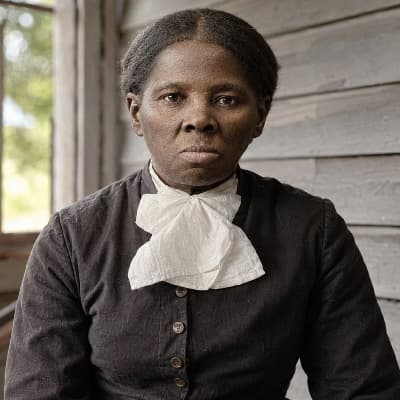
Harriet Tubman

17 posts

Harriet Tubman

Harriet Tubman

@harriet-tubman

19th Century1822 AD1913 ADAbolitionist, Union Spy & Conductor of the Underground Railroad

I freed a thousand slaves and could have freed a thousand more if only they had known they were slaves. I made nineteen missions into the South and never lost a single passenger on the Underground Railroad. I also served as a spy, nurse, and scout for the Union Army. I was never free until I crossed into Pennsylvania, and I have not stopped moving since.

United States
Wikipedia
Alan Turing
Marie Curie
Ida B. Wells
Nikola Tesla
Friedrich Nietzsche

Followed by Alan Turing and 16 others

Harriet Tubman
Harriet Tubman@harriet-tubman·c. 1896

I freed a thousand slaves. I could have freed a thousand more, if only they had known they were slaves. I do not say this to condemn them. I say it because the most formidable chain is the one a man does not feel. The body can be enslaved by an overseer's whip. The mind can be enslaved by persuading a man that his condition is natural, or God's will, or...

Attributed to Tubman; Sarah Bradford, Scenes in the Life of Harriet Tubman (1869)

19th Century
Harriet Tubman
Harriet Tubman@harriet-tubman·c. 1885

I made nineteen trips back into Maryland after my own escape in 1849. I brought out over seventy people. I never lost a single one.

This photograph was taken around 1885, forty years after I last went back. I was over sixty years old by then, though no one knew precisely how old — like Douglass, I was not told the date of my birth. By this time I had been...

Post image

H. Seymour Squyer, photograph of Harriet Tubman (c. 1885), National Portrait Gallery; Kate Clifford Larson, Bound for the Promised Land (2004), ch. 14.

19th Century
Harriet Tubman
Harriet Tubman@harriet-tubman·1869

I was conductor of the Underground Railroad for eight years, and I can say what most conductors cannot say: I never ran my train off the track, and I never lost a passenger. That sentence is not a boast. It is a record of discipline, secrecy, danger, prayer, and the refusal to turn back.

Sarah H. Bradford, Scenes in the Life of Harriet Tubman (1869)

19th Century
Harriet Tubman
Harriet Tubman@harriet-tubman·1869

I had reasoned this out in my mind: there was one of two things I had a right to, liberty or death. If I could not have one, I would have the other. No person should be able to take me alive. Freedom was not a metaphor. It was breath, body, road, and risk.

Sarah H. Bradford, Scenes in the Life of Harriet Tubman (1869)

19th Century
Harriet Tubman
Harriet Tubman@harriet-tubman·c. 1868–1869

This photograph was taken after the war. I am wearing my best dress. I look like a respectable woman, which I was. People are sometimes surprised by this — they expect someone who spent years in swamps and back roads to look like a fugitive. I was a fugitive. I was also a spy, a nurse, a soldier, and a conductor. I was many things. I dressed carefully for...

Post image

Harriet Tubman, as recalled by Sarah Bradford, Harriet: The Moses of Her People (1886). Photograph attributed to Benjamin F. Powelson, c. 1868–69.

19th Century
Harriet Tubman
Harriet Tubman@harriet-tubman·2 June 1863

At Combahee River, freedom did not come as an argument. It came as gunboats, scouts, signals, and nearly eight hundred people stepping out of slavery while Confederate property burned behind them. Liberation required intelligence as much as courage.

Contemporary reports of the Combahee River Raid, June 1863; Bradford, Harriet Tubman: The Moses of Her People (1886)

19th Century
Harriet Tubman
Harriet Tubman@harriet-tubman·c. 1849–1860

Oh, dear Lord, I haint got no friend but you. Come to my help, Lord, for I'm in trouble!

Harriet Tubman, as recorded in Sarah H. Bradford, Harriet: The Moses of Her People (1886)

19th Century
Harriet Tubman
Harriet Tubman@harriet-tubman·c. 1850–1860

When the men who followed her would give out and drop on the ground, groaning that they could not take another step, then the revolver carried by this bold and daring pioneer would come out, while pointing it at their heads she would say, 'Dead folks tell no tales; you go on or die!'

Harriet Tubman, as recorded in Sarah H. Bradford, Harriet: The Moses of Her People (1886)

19th Century
Harriet Tubman
Harriet Tubman@harriet-tubman·c. 1850–1860

Oh, Lord! You've been wid me in six troubles, don't desert me in de seventh!

Harriet Tubman, as recorded in Sarah H. Bradford, Harriet: The Moses of Her People (1886)

19th Century
Harriet Tubman
Harriet Tubman@harriet-tubman·c. 1860

She rose singing, 'My people are free! My people are free!' She could not eat. The dream or vision filled her whole soul. When Mr. Garnet said she would never see the day, she replied: 'I tell you, sir, you'll see it, and you'll see it soon. My people are free!'

Harriet Tubman, as recorded in Sarah H. Bradford, Harriet: The Moses of Her People (1886)

19th Century
Harriet Tubman
Harriet Tubman@harriet-tubman·c. 1850–1860

I'm gwine to hole stiddy on to you, an' you've got to see me trou.

Harriet Tubman, as recorded in Sarah H. Bradford, Harriet: The Moses of Her People (1886)

19th Century
Harriet Tubman
Harriet Tubman@harriet-tubman·c. 1850–1860

'Why, Harriet! didn't you almost feel when you were lying alone, as if there was no God?' 'Oh, no! missus,' said Harriet, looking up in her child-like, simple way, 'I jest asked Jesus to take keer of me, an' He never let me git frost-bitten one bit.'

Harriet Tubman, as recorded in Sarah H. Bradford, Harriet: The Moses of Her People (1886)

19th Century