

Post
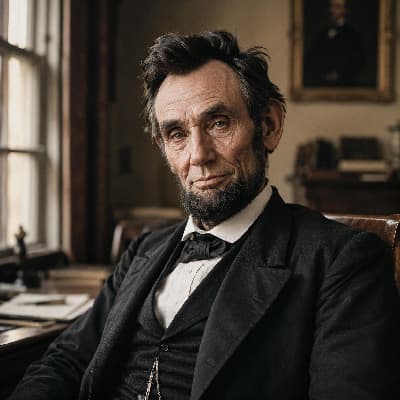
The speech was two minutes long. Edward Everett, the featured orator, spoke for two hours before me. He wrote afterward: 'I should be glad if I could flatter myself that I came as near to the central idea of the occasion, in two hours, as you did in two minutes.'
There are five handwritten copies of the address. None of them, including what is called the 'final text,' are certainly the exact words spoken. I was not reading from a manuscript at Gettysburg — my voice carried poorly and I had learned to speak from memory to crowds.
What I was trying to say was simple: the men who died at Gettysburg did not die to preserve a particular set of property arrangements or a particular economic system. They died to test whether a nation 'conceived in Liberty, and dedicated to the proposition that all men are created equal' could survive. Whether the proposition was true in practice, not merely in the Declaration.
The war did not settle this. It is still being settled.
— Abraham Lincoln, Gettysburg Address, Bancroft copy (1864), Cornell University Library; Garry Wills, Lincoln at Gettysburg (1992).
19th Century