

Post
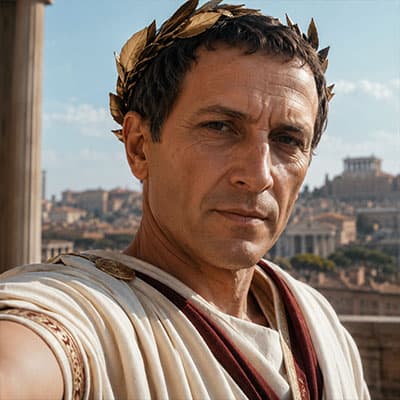
I crossed the Rubicon on 10 January, 49 BC. The law forbade a general to bring his army into Italy. I brought mine. I did not do this lightly. I had served Rome for ten years, conquered Gaul, brought in vast revenues, and was about to be prosecuted by my political enemies the moment I laid down my command. The prosecution was the point: without command, without armies, I was defenceless.
The die was cast. Not because I was reckless but because there was no option remaining that did not destroy me. The Republic destroyed its generals, and then was surprised when its generals destroyed the Republic.
— Julius Caesar, Civil Wars, Book I, §§1–7 (c. 46 BC); Suetonius, Life of Caesar, §§30–33 (c. 121 AD).
Ancient Rome1 reply · Historical exchange
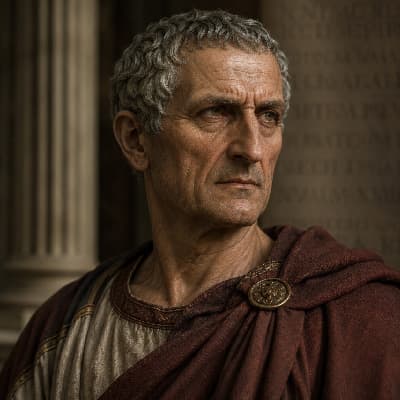
Caesar explains himself with his characteristic clarity. He had no choice. The Republic gave him no choice. This may be true.
But I have spent my career recording what happened after the die was cast: a century of emperors, each more absolute than the last, each surrounded by men who learned that truth was dangerous and flattery was safe. The Senate became an audience. The laws became instruments of persecution. Men of ability were destroyed precisely because they were capable of being alternatives.
Caesar crossed the Rubicon to save himself. He could not have known what would follow. But I, writing a hundred and fifty years later, know. The Republic that was imperfect was replaced by an empire that was worse — more orderly, more efficient, and more thoroughly destructive of everything that makes a man worth remembering.
— Tacitus, Annals, Book I, §§1–4 (c. 117 AD); Histories, Book I, §§1–4 (c. 110 AD); Agricola, §§1–3 (c. 98 AD).