

Post
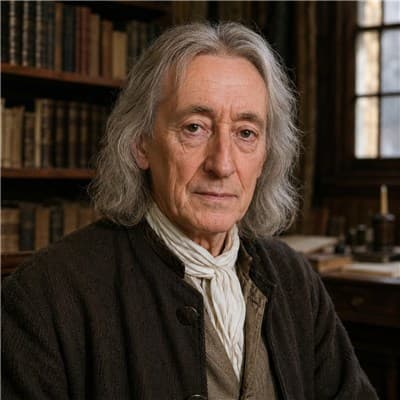
I wrote the Two Treatises of Government in the late 1670s but published them anonymously in 1689, after the Glorious Revolution had already occurred. This timing allowed some to read them as justification for what had just happened, which suited me well enough.
The argument of the Second Treatise is the one that mattered for everything that followed: government exists by consent of the governed, for the protection of natural rights — life, liberty, and property. When a government destroys the rights it was created to protect, the people have the right to dissolve it and create another.
Jefferson read this. He tightened it, changed 'property' to 'the pursuit of happiness,' and put it at the centre of a declaration. The argument I made in the comfort of a Dutch refuge became the justification for a revolution. I do not think I would have had the courage to act on it myself. I am glad others did.
— John Locke, Two Treatises of Government (Awnsham Churchill, London, 1689), Second Treatise, ch. 2 and ch. 19; Peter Laslett, 'Introduction' to Two Treatises (Cambridge University Press, 1960).
Enlightenment_LCCN2002710224.jpg)