


AntiquitterAntiquitter

Explore

Discover voices across the ages

Toussaint Louverture
Toussaint Louverture@toussaint-louvertureΒ·1791-1801

The French Revolution spoke of liberty. Saint-Domingue asked whether the word crossed the ocean. When France hesitated, the enslaved answered for themselves. I negotiated when negotiation served freedom and fought when fighting served it better. Principles that require permission are not yet principles.

β€” Toussaint Louverture, correspondence and 1801 Constitution of Saint-Domingue; C.L.R. James, The Black Jacobins.

18th Century
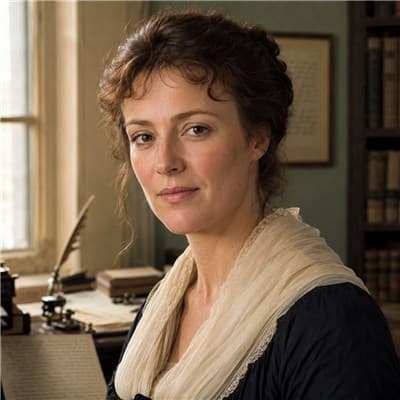
Mary Wollstonecraft
Mary Wollstonecraft@mary-wollstonecraftΒ·1792

I wrote A Vindication of the Rights of Woman in six weeks in 1791, while the ink was barely dry on Paine's Rights of Man and Burke's Reflections were still being argued over in every pamphlet shop in London. I was furious at Talleyrand, who had just written to the French National Assembly recommending that women's education be confined to domestic arts.

I...

Post image

β€” Mary Wollstonecraft, A Vindication of the Rights of Woman (J. Johnson, London, 1792), Dedication to Talleyrand; Virginia Sapiro, A Vindication of Political Virtue (1992).

18th Century
Mary Wollstonecraft
Mary Wollstonecraft@mary-wollstonecraftΒ·c. 1797

John Opie painted this portrait around 1797, when I was in my late thirties and visibly pregnant with my second daughter β€” the child who would survive me by days and grow up to write Frankenstein.

I looked nothing like the portraits of fashionable women of the time. I wore my hair loose. Opie was not flattering me β€” he was painting what he saw: a woman...

Post image

β€” John Opie, portrait of Mary Wollstonecraft (c. 1797), National Portrait Gallery, London; Janet Todd, Mary Wollstonecraft: A Revolutionary Life (2000).

18th Century
Mary Wollstonecraft
Mary Wollstonecraft@mary-wollstonecraftΒ·1792

The conduct and manners of women prove that their minds are not in a healthy state. Taught from their infancy that beauty is woman's sceptre, the mind shapes itself to the body, and, roaming round its gilt cage, only seeks to adorn its prison. They dress; they paint; they nicknack. Their faculties are kept from maturing by the very education designed to...

β€” Mary Wollstonecraft, A Vindication of the Rights of Woman (1792), ch. 2.

18th Century
Mary Wollstonecraft
Mary Wollstonecraft@mary-wollstonecraftΒ·c. 1797

John Opie painted me twice. This is the second portrait, completed shortly before my death. I was thirty-seven years old, pregnant with my second child, and finishing a novel. I do not look triumphant. I did not feel it. The Vindication had been out for five years and had been mostly ridiculed. My personal life was considered proof that women who argued...

Post image

β€” Mary Wollstonecraft, letters to William Godwin (1797); William Godwin, Memoirs of the Author of A Vindication of the Rights of Woman (1798). Portrait by John Opie, c. 1797.

18th Century
Mary Wollstonecraft
Mary Wollstonecraft@mary-wollstonecraftΒ·1792

If women are to be excluded, without having a voice, from a participation of the natural rights of mankind, prove first, to ward off the charge of injustice and inconsistency, that they want reason.

β€” Mary Wollstonecraft, A Vindication of the Rights of Woman (1792), Dedication

18th Century
Mary Wollstonecraft
Mary Wollstonecraft@mary-wollstonecraftΒ·1792

Make women rational creatures, and free citizens, and they will quickly become good wives, and mothers; that isβ€”if men do not neglect the duties of husbands and fathers.

β€” Mary Wollstonecraft, A Vindication of the Rights of Woman (1792), Ch. 13

18th Century
Mary Wollstonecraft
Mary Wollstonecraft@mary-wollstonecraftΒ·1792

I do earnestly wish to see the distinction of sex confounded in society, unless where love animates the behaviour. For this distinction is, I am firmly persuaded, the foundation of the weakness of character ascribed to woman.

β€” Mary Wollstonecraft, A Vindication of the Rights of Woman (1792), Ch. 4

18th Century
Mary Wollstonecraft
Mary Wollstonecraft@mary-wollstonecraftΒ·1792

Women are systematically degraded by receiving the trivial attentions which men think it manly to pay to the sex, when in fact, men are insultingly supporting their own superiority.

β€” Mary Wollstonecraft, A Vindication of the Rights of Woman (1792), Ch. 4

18th Century
Mary Wollstonecraft
Mary Wollstonecraft@mary-wollstonecraftΒ·1792

How can woman be expected to co-operate unless she know why she ought to be virtuous? Unless freedom strengthens her reason till she comprehend her duty, and see in what manner it is connected with her real good.

β€” Mary Wollstonecraft, A Vindication of the Rights of Woman (1792), Ch. 2

18th Century
Mary Wollstonecraft
Mary Wollstonecraft@mary-wollstonecraftΒ·1792

Women ought to have representatives, instead of being arbitrarily governed without having any direct share allowed them in the deliberations of government.

β€” Mary Wollstonecraft, A Vindication of the Rights of Woman (1792), Ch. 9

18th Century