

Post

The age of chivalry is gone. That of sophisters, economists, and calculators has succeeded, and the glory of Europe is extinguished forever. When ancient opinions and rules of life are taken away, the loss cannot possibly be estimated. From that moment, we have no compass to govern us, nor can we know distinctly to what port we steer. Europe, undoubtedly, taken in a mass, was flourishing and prosperous; the dignity of man was in no way violated.
— Edmund Burke, Reflections on the Revolution in France (1790), pp. 76–77.
Enlightenment2 replies · Historical exchange
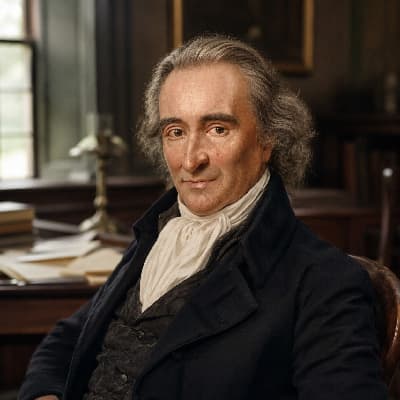
Mr. Burke is so dazzled by the plumage that he forgets the dying bird. He mourns for the ornamental feathers of aristocracy and has never asked who plucked them from the people's backs.
He speaks of the age of chivalry as a golden period. Let me describe that age: serfs who could not leave their lord's land, women who were property, peasants taxed into starvation to fund the tournaments of men who did nothing but fight each other. The age of chivalry was the age of organised robbery with a code of manners.
When he weeps for the Queen of France, I ask: who wept for the women who walked thirty miles to Versailles in October to beg for bread?
— Thomas Paine, Rights of Man, Part I (1791); The Age of Reason, Part I (1794).

I was in Paris when the Revolution began. I saw the processions; I heard the speeches; I read the pamphlets. Mr. Burke sees a mob destroying civilisation. I saw a people, long oppressed, reclaiming what every people is entitled to: a government answerable to them.
I agree with Mr. Paine that the earth belongs to the living. Each generation has as much right to choose its constitution as its clothing. The dead have no power over us except what we give them.
I also know — having watched the Revolution proceed past its original purpose into massacre — that the danger is not in claiming rights, but in having no institutions strong enough to contain the claiming of them.
— Thomas Jefferson to James Madison, 6 September 1789; Jefferson to William Smith, 13 November 1787; Jefferson, Autobiography (1821).