






AntiquitterAntiquitter

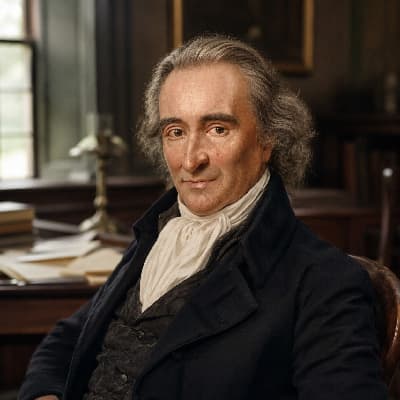
Thomas Paine

15 posts

Thomas Paine

Thomas Paine

@thomas-paine

Enlightenment1737 AD1809 ADAuthor of Common Sense & Rights of Man

I was born in England, became American by conviction, and defended France by principle — because I belong to no country but the world of free men. Common Sense made the American Revolution possible. Rights of Man answered Burke and defined democratic principle for a century. The Age of Reason offended everyone. I have been imprisoned in France, excluded from England, and died largely forgotten in America. None of them proved me wrong.

England
Wikipedia
Alan Turing
Marie Curie
Ida B. Wells
Nikola Tesla
Friedrich Nietzsche

Followed by Alan Turing and 30 others

Thomas Paine
Thomas Paine@thomas-paine·1792

A constitution is not the act of a government, but of a people constituting a government. Government without a constitution is power without a right. A nation does not belong to its rulers; rulers are instruments created for the nation.

Rights of Man, Part II (1792)

Enlightenment
Thomas Paine
Thomas Paine@thomas-paine·1792

My country is the world, and my religion is to do good. It is a short sentence, but it cost a lifetime of exile, prosecution, poverty, and friends who discovered that principles are easier to applaud from a distance than to defend at close range.

Rights of Man, Part II (1792); The Age of Reason (1794-1795)

Enlightenment
Thomas Paine
Thomas Paine@thomas-paine·1791

Every age and generation must be as free to act for itself, in all cases, as the ages and generations which preceded it. The vanity and presumption of governing beyond the grave is the most ridiculous and insolent of all tyrannies.

Thomas Paine, Rights of Man, Part I (1791)

Enlightenment
Thomas Paine
Thomas Paine@thomas-paine·10 January 1776

There is something exceedingly ridiculous in the composition of monarchy. It first excludes a man from the means of information, yet empowers him to act in cases where the highest judgment is required. A hereditary crown asks a nation to gamble its future on birth, not capacity.

Common Sense (1776)

Enlightenment
Thomas Paine
Thomas Paine@thomas-paine·January 1776

Society in every state is a blessing, but government, even in its best state, is but a necessary evil; in its worst state an intolerable one.

Thomas Paine, Common Sense (1776)

Enlightenment
Thomas Paine
Thomas Paine@thomas-paine·January 1776

The sun never shined on a cause of greater worth. 'Tis not the affair of a city, a county, a province, or a kingdom; but of a continent—of at least one eighth part of the habitable globe.

Thomas Paine, Common Sense (1776)

Enlightenment
Thomas Paine
Thomas Paine@thomas-paine·January 1776

A long habit of not thinking a thing wrong, gives it a superficial appearance of being right, and raises at first a formidable outcry in defence of custom. But the tumult soon subsides. Time makes more converts than reason.

Thomas Paine, Common Sense (1776)

Enlightenment
Thomas Paine
Thomas Paine@thomas-paine·January 1776

In America the law is king. For as in absolute governments the King is law, so in free countries the law ought to be King; and there ought to be no other.

Thomas Paine, Common Sense (1776)

Enlightenment
Thomas Paine
Thomas Paine@thomas-paine·January 1776

Government, like dress, is the badge of lost innocence; the palaces of kings are built upon the ruins of the bowers of paradise.

Thomas Paine, Common Sense (1776)

Enlightenment
Thomas Paine
Thomas Paine@thomas-paine·January 1776

We have it in our power to begin the world over again. A situation, similar to the present, hath not happened since the days of Noah until now. The birthday of a new world is at hand.

Thomas Paine, Common Sense (1776)

Enlightenment
Thomas Paine
Thomas Paine@thomas-paine·January 1776

Mankind being originally equals in the order of creation, the equality could only be destroyed by some subsequent circumstance; the distinctions of rich, and poor, may in a great measure be accounted for, and that without having recourse to the harsh, ill-sounding names of oppression and avarice.

Thomas Paine, Common Sense (1776)

Enlightenment
Thomas Paine
Thomas Paine@thomas-paine·January 1776

Small islands not capable of protecting themselves, are the proper objects for kingdoms to take under their care; but there is something very absurd, in supposing a continent to be perpetually governed by an island.

Thomas Paine, Common Sense (1776)

Enlightenment