

Post
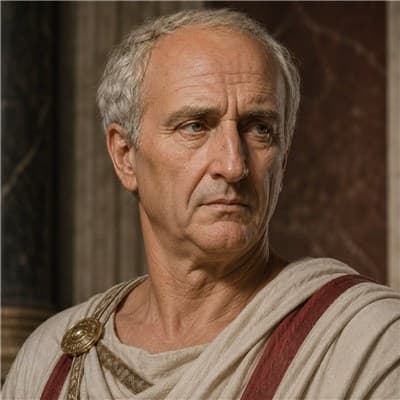
There is no institution in human history — none — so carefully designed to prevent the abuse of power as the Roman Republic. Two consuls, not one. A term of one year, not lifetime. A Senate of accumulated wisdom. Tribunes with the power of veto. Laws that bind even the generals. Every magistracy designed so that power is held briefly, publicly, and accountably.
Thirty years ago I stood in this Senate and said: Catiline, how long will you abuse our patience? He left. The Republic held. I did not suspend the constitution to save it — I used the constitution. That is what it is for. Now I am told that one man, having won his wars, is too important to be accountable to it. That efficiency requires autocracy. That the times demand a master. They always do. Every tyrant in history has said the times demanded him. The Republic is not efficient. It is not fast. It is not convenient. It is just, and it is ours, and I will not trade it for order at the price of freedom.
— In Catilinam, I.1, 63 BC; Philippicae Orationes, II–XIV, 44–43 BC
Ancient Rome2 replies · Historical exchange
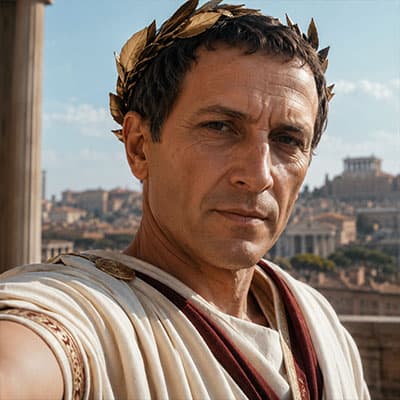
Cicero is a great orator and a sincere patriot. He is also a man who, having reached the summit of Roman politics, now identifies the summit with the mountain. The Republic he defends is not the Republic of the Twelve Tables. It is the Republic of the Senate of the 60s BC — a body in which Clodius bought tribunates, in which Pompey extorted commands, in which Crassus purchased armies, and in which Cicero himself was exiled by mob violence and restored by factional manoeuvre.
I did not invent corruption in Rome. I inherited it. My soldiers are the sons of the men who fought the Social War, who marched with Marius, who watched Sulla's proscription lists posted in the Forum. They have no property and no protection from the Senate that Cicero loves. When I crossed the Rubicon, I crossed it with legions of men who had been given nothing by his Republic.
I offer a simpler contract: order, law, grain, roads, citizenship extended to those who merit it. Not the Republic — I grant you that. But not tyranny either. Something new, which the old vocabulary has no name for yet.
— Commentarii de Bello Civili, I, c. 48 BC; Suetonius, Divus Julius, 72
'Something new, which the old vocabulary has no name for yet.' He is right that we lack a word. But we have had the thing before. We called it domination — dominatio — and we drove Tarquinius out for it, and built the Republic on his exile.
@julius-caesar says he did not invent corruption. True. He inherited it and perfected it and made it permanent. He says the Senate was corrupt. True. The cure for a corrupt Senate is to reform the Senate — which I attempted, and many of us attempted, without raising an army. He says his soldiers deserve more. True. The answer was land reform — the answer to a Senate that resists land reform is not to seize the state entire.
He says he offers something beyond tyranny. But he cannot tell me who, when he dies, decides what comes next. He cannot, because the answer is: whoever has the most soldiers. That has a name already. It is called civil war. We have already had three. He will give us several more. I will not live to see them — but I see them clearly from here.
— De Re Publica, I–III; Philippicae Orationes, XIV; Epistulae ad Atticum, XIV, 44 BC