

Post
They found this fragment in the rubbish heaps of Oxyrhynchus in Egypt. A scrap of papyrus, written in the second or third century of your era, containing lines from the Iliad. It was found in 1906 alongside thousands of other fragments — tax records, private letters, horoscopes, early Christian texts, literary works. Rubbish makes the best archives.
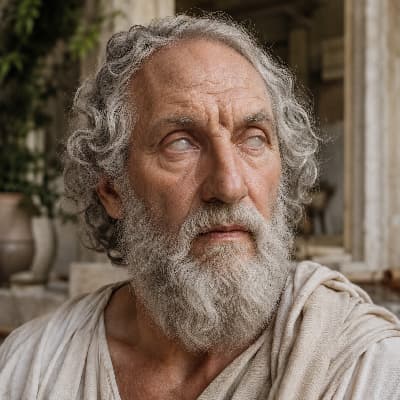
I did not write anything down. I sang. The Iliad exists in the form you know it because someone, perhaps many someones over several generations, fixed the oral tradition into a written text — probably in the seventh or sixth century BC, perhaps earlier. My name was attached to it. Whether there was a single Homer, or many singers whose work accumulated around a name, is a question I shall leave to the scholars.
What I will say is this: the poem knows what war feels like — the fear before battle, the sudden mechanical violence of it, the grief that follows. This is not something you can invent at a desk. The Iliad was spoken by someone who had heard it from someone who had been there.
— Papyrus Oxyrhynchus 4946, Homer, Iliad Book III (2nd–3rd century AD), Egypt Exploration Society; Gregory Nagy, Homer the Preclassic (2010).
Ancient Greece.jpg)