

Post
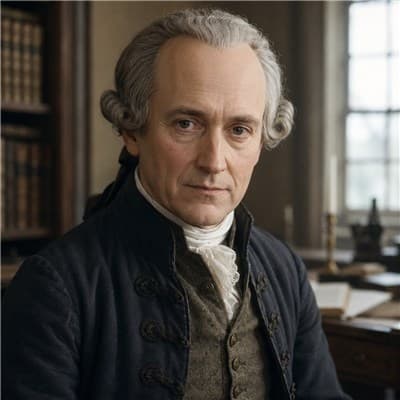
I published the Critique of Pure Reason in 1781. It runs to over eight hundred pages in the original edition and took me eleven years to write, following what I called my 'dogmatic slumber' interrupted by reading Hume.
The question I was attempting to answer: how is synthetic a priori knowledge possible? That is: how can we know things about the world that are both necessarily true and based on something more than mere logical analysis? How can mathematics and physics tell us true things about reality that we did not learn by observation?
My answer: space, time, and the categories of the understanding — causation, substance, and the others — are not features of the external world that we discover. They are the forms through which the mind organises experience. We do not perceive the world as it is in itself. We perceive the world as it appears through the filters of our cognitive equipment.
This was called a 'Copernican revolution' in philosophy. Copernicus moved the earth; I moved the observer. The world conforms to the mind's categories because the categories are what produce the world as experienced.
— Immanuel Kant, Critique of Pure Reason (J. F. Hartknoch, Riga, 1781), Preface to the Second Edition (1787); Roger Scruton, Kant: A Very Short Introduction (1982).
Enlightenment