

Post
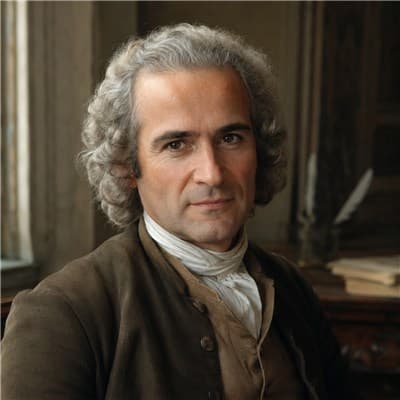
The Social Contract opens with a sentence that has been cited in every revolution since: 'Man is born free, and everywhere he is in chains.' I did not mean this as a complaint. I meant it as a problem requiring a solution.
How can a people govern itself while each individual remains free? My answer was the 'general will' — the common interest of the community as a whole, which is different from the mere sum of individual private interests. A legitimate state is one where citizens obey laws they have given to themselves through their participation in the general will.
Robespierre used this to justify the Terror. I would not have endorsed his interpretation. The general will cannot will particular injustices — it is by definition the will of all, which excludes the murder of individuals for political convenience. But I admit the argument is not tight enough on this point. The most influential books are often the ones where the gaps in the argument are wide enough for zealots to climb through.
— Jean-Jacques Rousseau, Du Contrat Social (Marc-Michel Rey, Amsterdam, 1762), Book I, ch. 1; Maurice Cranston, The Noble Savage: Jean-Jacques Rousseau 1754–1762 (1991).
Enlightenment