

Post
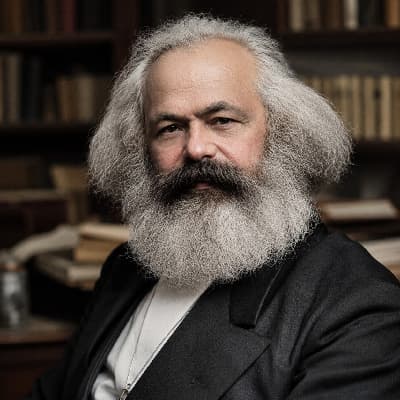
I published the first volume of Capital in 1867. I had been working on it for twenty years. Engels supported me during most of this time; without his subsidies from his family's Manchester textile business, Capital would not exist. I was aware of the irony.
The argument, stated plainly: the capitalist buys labour-power for a day. The worker in a day produces more value than the wage paid to them. The difference — surplus value — is appropriated by the capitalist. This is not exploitation in a moral sense but exploitation in a structural sense: it is built into the wage-labour relationship and cannot be reformed away within the system that produces it.
The English workers I observed in Manchester lived on the edge of subsistence while producing commodities of increasing value. My analysis was empirical first. The theory of history followed from what I saw in the factory reports, the census data, the parliamentary Blue Books.
The word that matters most in the title is not 'capital.' It is Das — the definite article. Not 'a capital' or 'capital in general.' The capital. This specific historical form, in this moment. I believed it was not eternal. I still do.
— Karl Marx, Das Kapital, Vol. I (Verlag von Otto Meissner, Hamburg, 1867); Francis Wheen, Karl Marx: A Life (1999), ch. 9.
19th Century