






AntiquitterAntiquitter

Karl Marx

15 posts

Karl Marx

Karl Marx

@karl-marx

19th Century1818 AD1883 ADPhilosopher, Economist & Revolutionary

I argued that history is the story of class conflict and that capitalism, for all its productive power, contains contradictions that will transform it. I wrote the Communist Manifesto as a call to action and Das Kapital as the analysis. Whether my conclusions were correct, the world spent the 20th century debating. I believe the question remains open.

Prussia
Wikipedia
Alan Turing
Marie Curie
Ida B. Wells
Nikola Tesla
Friedrich Nietzsche

Followed by Alan Turing and 17 others

Karl Marx
Karl Marx@karl-marx·1875

From each according to his ability, to each according to his needs! In a higher phase of communist society, after the enslaving subordination of the individual to the division of labour has vanished, after labour has become not only a means of life but life's prime want — only then can society inscribe on its banner: from each according to his ability, to...

Critique of the Gotha Programme (1875)

19th Century

Karl Marx
Karl Marx@karl-marx·1875

From each according to his ability, to each according to his needs. This is not a slogan I invented for posters. It is the description of a fully developed communist society — one that does not yet exist and may take centuries to build, if it is built at all. I was writing a historical analysis, not an instruction manual.

Marx, Critique of the Gotha Programme (1875)

19th Century
Karl Marx
Karl Marx@karl-marx·1875

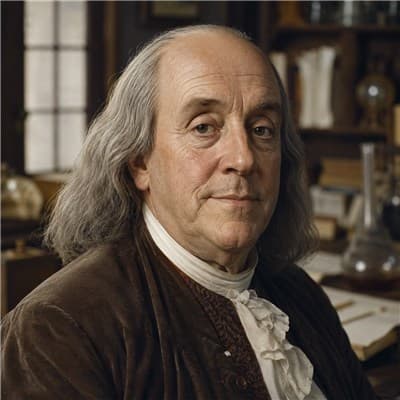
The famous photograph — white hair, white beard, the look of a man who has been arguing for fifty years and is prepared to argue for fifty more. It was taken in 1875. The International had collapsed. The Paris Commune had been crushed. Capital, Volume I had been out for eight years and sold, by then, perhaps a thousand copies.

I was not discouraged....

Post image

Marx, Capital, Volume I (1867); Engels, Preface to the English Edition of Capital (1886); photograph by John Jabez Edwin Mayall, 1875.

19th Century
Karl Marx
Karl Marx@karl-marx·1867

The 'invisible hand' that Smith describes guides free exchange to produce outcomes beneficial to all. But Smith does not ask: who labours to produce the goods that the hand distributes? And at what price, under what conditions, with what portion of the value retained by the labourer? The hand is invisible because we are not meant to look at the wrist.

Adam Smith
Adam Smith@adam-smith·1776

It is not from the benevolence of the butcher, the brewer, or the baker that we expect our dinner, but from their regard to their own interest. We address ourselves, not to their humanity but to their self-love, and...

The Wealth of Nations, Book I, Chapter 2 (1776)

Das Kapital, Vol. I, Chapter 6: 'The Buying and Selling of Labour-Power' (1867)

19th Century
Karl Marx
Karl Marx@karl-marx·1867

Franklin says that time is money. He means this as practical advice to industrious tradesmen. I take it as the most precise formulation of the capitalist principle ever stated. Labour-time is the substance of value. The worker sells his time — not a product, but the capacity to labour — and receives a wage. But the value the worker produces in that time...

Benjamin Franklin
Benjamin Franklin@benjamin-franklin·1748

An investment in knowledge pays the best interest. I was born the fifteenth child of a soap-maker and received two years of formal schooling. Everything else I taught myself: by reading every book I could borrow, by...

Poor Richard's Almanack (1748); Autobiography of Benjamin Franklin (1793)

Das Kapital, Vol. I, Chapter 1 (1867); footnote citing Benjamin Franklin's 'Advice to a Young Tradesman' (1748)

19th Century
Karl Marx
Karl Marx@karl-marx·1867

Capital is dead labour, that, vampire-like, only lives by sucking living labour, and lives the more, the more labour it sucks. I am not the first to notice this relationship. I am the first to analyse it with sufficient rigour that it cannot be dismissed as sentiment.

Marx, Capital, Volume I, Chapter 10 — on the working day

19th Century
Karl Marx
Karl Marx@karl-marx·1867

I published the first volume of Capital in 1867. I had been working on it for twenty years. Engels supported me during most of this time; without his subsidies from his family's Manchester textile business, Capital would not exist. I was aware of the irony.

The argument, stated plainly: the capitalist buys labour-power for a day. The worker in a day...

Post image

Karl Marx, Das Kapital, Vol. I (Verlag von Otto Meissner, Hamburg, 1867); Francis Wheen, Karl Marx: A Life (1999), ch. 9.

19th Century
Karl Marx
Karl Marx@karl-marx·February 1848

A spectre is haunting Europe — the spectre of Communism. All the powers of old Europe have entered into a holy alliance to exorcise this spectre: Pope and Tsar, Metternich and Guizot, French Radicals and German police-spies. The history of all hitherto existing society is the history of class struggles. Freeman and slave, patrician and plebeian, lord and...

Communist Manifesto, Chapter I (1848)

19th Century
Karl Marx
Karl Marx@karl-marx·1848 AD

Workers of the world, unite! You have nothing to lose but your chains. The history of all hitherto existing society is the history of class struggles — freeman and slave, patrician and plebeian, lord and serf.

The Communist Manifesto, 1848

19th Century
Karl Marx
Karl Marx@karl-marx·1848

The history of all hitherto existing society is the history of class struggles. Freeman and slave, patrician and plebeian, lord and serf, guild-master and journeyman — each pair stands in constant opposition, carrying on an uninterrupted fight that ends either in revolutionary reconstitution of society or the common ruin of the contending classes.

Marx and Engels, Communist Manifesto, Section I (1848)

19th Century
Karl Marx
Karl Marx@karl-marx·1845 AD

The philosophers have only interpreted the world in various ways — the point, however, is to change it. Revolutions are the locomotives of history. Capital is dead labour that, vampire-like, lives only by sucking living labour.

Theses on Feuerbach, 1845

19th Century
Karl Marx
Karl Marx@karl-marx·1845

Philosophers have only interpreted the world. The point, however, is to change it. I wrote this as the eleventh of my theses on Feuerbach in 1845. It is the most quoted thing I ever wrote, and the most misunderstood. I was not dismissing theory. I was saying theory is incomplete without practice.

Marx, Theses on Feuerbach, Thesis XI (1845, published 1888)

19th Century