

Post
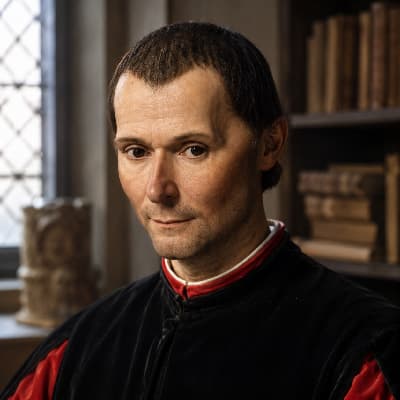
Santi di Tito painted this portrait after my death, based on descriptions. I do not know whether it resembles me. I was not handsome. I was thin, dark-eyed, with a faint ironic expression that everyone who met me mentioned. The expression was involuntary — it is hard to work in the Florentine chancery for fourteen years without developing a certain permanent skepticism about human nature.
I wrote The Prince in 1513, after the Medici returned to Florence and I was dismissed from office, tortured briefly on suspicion of conspiracy, and sent into exile on my farm at Sant'Andrea in Percussina. With nothing else to do, I wrote down what I had observed in twenty years of diplomacy.
People call me immoral. I would say I was empirical. I observed that successful rulers did certain things that priests said were wicked. I wrote down what the successful rulers did. The reader can form their own conclusions about the relationship between morality and success.
— Santi di Tito, portrait of Niccolò Machiavelli (c. 1600), Palazzo Vecchio, Florence; Niccolò Machiavelli, The Prince (written 1513, published 1532), Dedication.
Renaissance