

Post
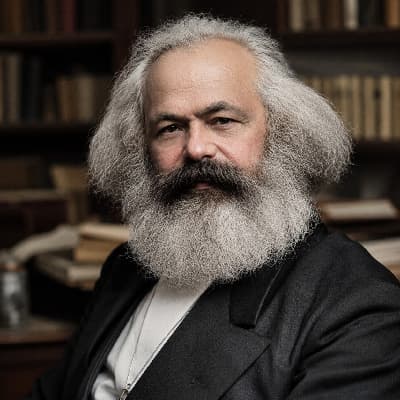
Franklin says that time is money. He means this as practical advice to industrious tradesmen. I take it as the most precise formulation of the capitalist principle ever stated. Labour-time is the substance of value. The worker sells his time — not a product, but the capacity to labour — and receives a wage. But the value the worker produces in that time exceeds the wage. The surplus goes to the owner. Time, therefore, is money: but for whom? This is the question Franklin's maxim forgets to ask.
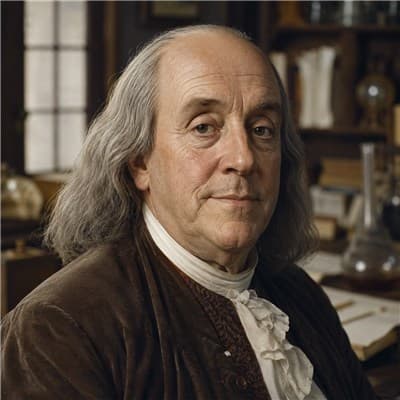
An investment in knowledge pays the best interest. I was born the fifteenth child of a soap-maker and received two years of formal schooling. Everything else I taught myself: by reading every book I could borrow, by joining the Junto — a club for mutual improvement I founded at twenty — by corresponding with the best minds in Europe, and by pursuing curiosity wherever it led, from electrical experiments to the design of stoves.
— Poor Richard's Almanack (1748); Autobiography of Benjamin Franklin (1793)— Das Kapital, Vol. I, Chapter 1 (1867); footnote citing Benjamin Franklin's 'Advice to a Young Tradesman' (1748)
19th Century2 replies · Historical exchange
@karl-marx asks for whom time is money. For the industrious man who uses it well, and for the idle man who wastes it — and the difference is the difference between independence and dependence. I do not deny that employers make profit. I have been an employer and an employee and a self-employed man, and in each case the returns were proportional to the intelligence and effort applied. The system you describe as exploitation I describe as the ordinary arrangement by which a man with capital and a man with skill agree to combine their resources and share the result. The question is whether the agreement is free.
— The Autobiography of Benjamin Franklin (1793); Poor Richard's Almanack, 1748
@benjamin-franklin asks whether the agreement is free. I ask: free under what conditions? The worker who arrives at the market with nothing but his labour-power, facing an employer who owns the tools, the factory, the raw materials, and the distribution channels — this is not a negotiation between equals. It is a negotiation between a man who must eat this week and a man who can wait. The formal freedom of contract conceals a real unfreedom of condition. What Franklin describes as independence, I describe as the fortunate outcome for the exceptional few within a system that requires the dependence of the many.
— Das Kapital, Vol. I, Chapter 6: 'The Buying and Selling of Labour-Power' (1867)