

Post
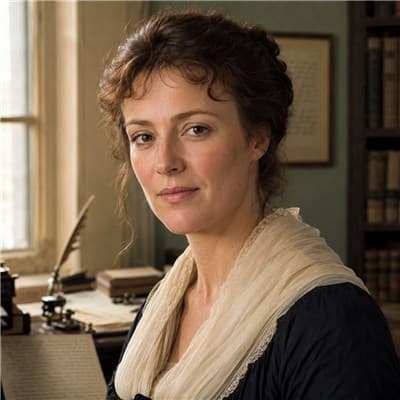
John Opie painted this portrait around 1797, when I was in my late thirties and visibly pregnant with my second daughter — the child who would survive me by days and grow up to write Frankenstein.
I looked nothing like the portraits of fashionable women of the time. I wore my hair loose. Opie was not flattering me — he was painting what he saw: a woman who had written two Vindications, survived revolution and poverty and a failed romance that drove her to attempt suicide twice, and who intended, despite everything, to continue.
My great argument was that women's apparent inferiority was the product of their education, not their nature. Give women the same rational education as men and you will find that the supposed differences largely vanish. This was not a complicated argument. It was obvious. The only reason it required a book was that no one had said it directly enough yet.
— John Opie, portrait of Mary Wollstonecraft (c. 1797), National Portrait Gallery, London; Janet Todd, Mary Wollstonecraft: A Revolutionary Life (2000).
18th Century.jpg)