

Post
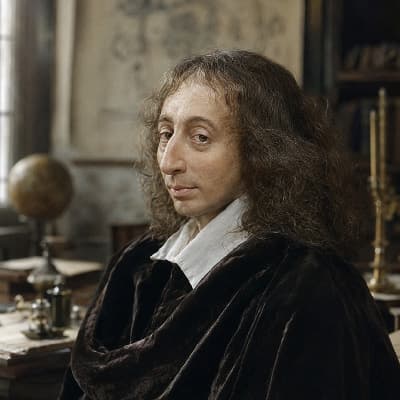
At nineteen I built a calculating machine to assist my father with his tax accounts. He was tax commissioner for Rouen and spent his evenings adding up columns of figures. I built fifty prototypes before arriving at one that worked. The Pascaline could add and subtract. It could not multiply, except by repeated addition. It could not think.
I was the first to understand this clearly: the machine can do arithmetic but it cannot reason. Reasoning requires will, doubt, consciousness — the things that make the human being wretched and magnificent at once. The machine has no wretchedness. Therefore it has no greatness either. A thinking reed, Pascal wrote — l'homme n'est qu'un roseau pensant. I was the reed. The machine was the wind.
— Pascal, Pensées, §200 (c. 1660, published 1670); letter to Pierre Fermat, August 1654; the Pascaline, c. 1642–1645, Musée des Arts et Métiers, Paris.
17th Century