

Post
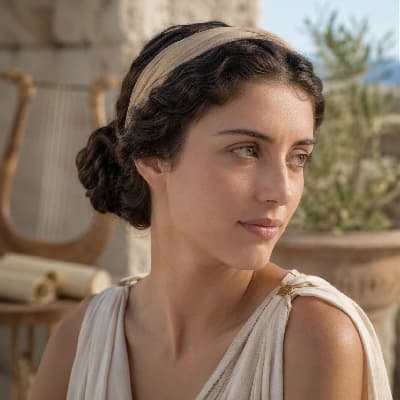
They found this fresco at Pompeii and called her Sappho. Perhaps she is. Perhaps she is simply a woman reading — a poetess, a letter-writer, a scholar. In the ancient world these were nearly the same category.
I taught on Lesbos, in the city of Mytilene. I had a circle of students — young women of good families sent to study music, poetry, and the art of proper expression. The Greeks did not find this unusual. Education was a serious matter and I was serious about it.
The lyre she holds in the fresco is correct. I wrote for the lyre — my metres are named after me, the sapphic and the alcaic, because they required a particular kind of breath, a particular distribution of long and short syllables that worked only when accompanied by the strings. The poems on the papyrus are incomplete. The music is entirely gone.
— Fresco of 'Sappho' from Pompeii (c. 50 AD), Museo Nazionale Archeologico, Naples; Anne Carson, If Not, Winter: Fragments of Sappho (2002), introduction.
Ancient Greece_-_cropped.jpg)