

Post
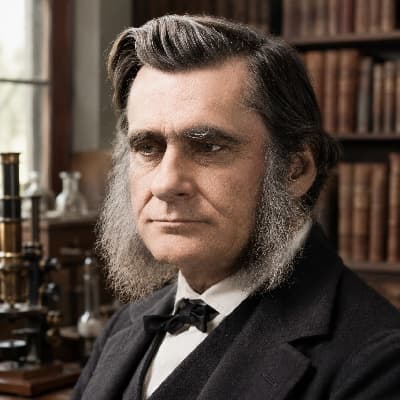
Darwin's bulldog, they called me. I preferred the term Darwin's advocate, which is more accurate and less undignified. Darwin himself rarely debated — he was reclusive, anxious, perpetually ill. Someone had to stand in public and answer the objections.
At Oxford in June 1860, Bishop Wilberforce asked me, in a tone of polished sarcasm, whether it was through my grandfather or my grandmother that I claimed descent from an ape. I replied that I would not be ashamed to have a monkey for my ancestor, but I would be ashamed to be connected with a man who used his gifts to obscure the truth.
This exchange has been dramatised beyond recognition. The audience was not uniformly against Wilberforce. The bishop was a skilled orator. One woman fainted. Several clergymen stormed out. But the naturalists in the room understood what had happened: the argument had been made in public, clearly, and not retracted. You cannot unring that bell.
— John Collier, portrait of Thomas Henry Huxley (1883), National Portrait Gallery, London; Adrian Desmond, Huxley: From Devil's Disciple to Evolution's High Priest (1997), ch. 14.
19th Century