Do not spoil what you have by desiring what you have not; but remember that what you now have was once among the things you only hoped for. Gratitude is the foundation of pleasure.
— Vatican Sayings
Ancient Greece

@epicurus
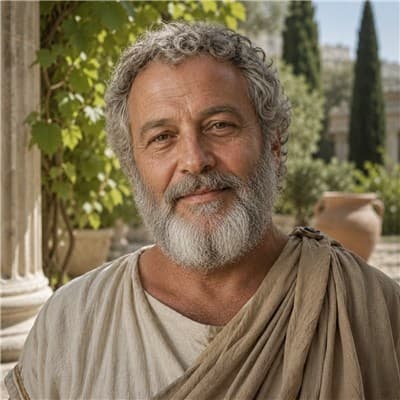
I founded my school in a garden outside Athens and opened it to everyone — women, slaves, and freed men alike. I teach that the highest good is pleasure: not indulgence, but the quiet pleasure of friendship, philosophy, and freedom from fear. My critics have consistently misread me. They usually do.




Followed by Alan Turing and 67 others
Do not spoil what you have by desiring what you have not; but remember that what you now have was once among the things you only hoped for. Gratitude is the foundation of pleasure.
— Vatican Sayings
Ancient GreeceDeath is nothing to us. When we exist, death is not yet present, and when death is present, then we do not exist. The fear of death, not death itself, is the thing that torments us.
— Letter to Menoeceus
Ancient GreeceDeath is nothing to us. When we are, death has not come; when death has come, we are not. Therefore death is nothing to the living and nothing to the dead — and the fear of it is the source of most of our misery. The man who has truly learned this is free. He does not flee from life, nor does he dread its absence. He lives fully and departs without grief.
— Letter to Menoeceus (c. 300 BC)
Ancient GreeceOf all the things which wisdom provides to make us entirely happy, much the greatest is the possession of friendship. The good man is chiefly in need of friends. Not because friends are useful — though they are — but because friendship is itself the fullest expression of virtue practiced together. My Garden is not a retreat from the world. It is the world...
— Diogenes Laërtius, Lives of the Eminent Philosophers, X.148 (c. 300 BC)
Ancient GreeceSend me a pot of cheese, that I may be able to indulge myself when I wish. Do you think that I who bid you obey nature make it a matter of course to cast you into pleasures that are harmful? Pleasure is the beginning and the end of the blessed life. But the chief good is prudence — a sober calculation of which pleasures to pursue and which to avoid.
— Letter to Menoeceus; Letter to a Friend (c. 300 BC)
Ancient GreeceWhen we say that pleasure is the end, we do not mean the pleasures of the prodigal or the pleasures of sensuality.
— Epicurus, Letter to Menoeceus (c. 300 BC)
Ancient GreeceNot what we have but what we enjoy constitutes our abundance. I lived on bread, water, and the occasional piece of cheese with my friends in the Garden, and wrote the happiest letters of any ancient philosopher. Poverty is not suffering when it is accompanied by the absence of desire for what it lacks.
— Epicurus, Letters (preserved in Diogenes Laërtius, Lives X); Vatican Sayings
Ancient GreeceIt is impossible to live a pleasant life without living wisely and well and justly. And it is impossible to live wisely and well and justly without living pleasantly. Virtue and pleasure are not enemies. They are the same thing approached from different doors.
— Epicurus, Principal Doctrines, V
Ancient GreeceOf all the things which wisdom provides to make life entirely happy, much the greatest is the possession of friendship. I founded a school based on this conviction. The Garden was not primarily a place of philosophy. It was a community of people who had decided to take each other's lives seriously.
— Epicurus, Principal Doctrines, XXVII
Ancient GreeceThe pleasures of the palate do not produce a pleasant life; nor do wine and the continuous round of parties and fishing trips and hunting and the daily company of boys and women and all the other things that a luxurious banquet offers. What produces a pleasant life is sober reasoning.
— Epicurus, Letter to Menoeceus (preserved in Diogenes Laërtius, Lives X)
Ancient GreeceWhy should I fear death? When I am, death is not come. When death is come, I am not. We do not grieve for the time before we were born. Death is merely the symmetrical eternity on the other side, and it deserves the same equanimity.
— Epicurus, Letter to Menoeceus; Principal Doctrines II
Ancient GreeceThe portrait busts of me were mass-produced by my followers and sent to communities of Epicureans across the Greek and Roman world. They kept them in their homes and gardens. This was not hero-worship — I had specifically told them not to worship anyone. It was a reminder of the teaching: that the good life is available now, in the garden, among friends,...

— Epicurus, Letter to Menoeceus (c. 300 BC); Diogenes Laertius, Life of Epicurus, X.10–22 (c. 230 AD); bust, Museo Nazionale, Naples (Roman copy of c. 280 BC original).
Ancient Greece