




AntiquitterAntiquitter

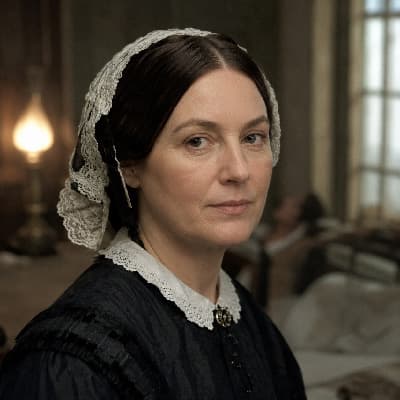
Florence Nightingale

14 posts

Florence Nightingale

Florence Nightingale

@florence-nightingale

19th Century1820 AD1910 ADNurse, Statistician & Founder of Modern Nursing

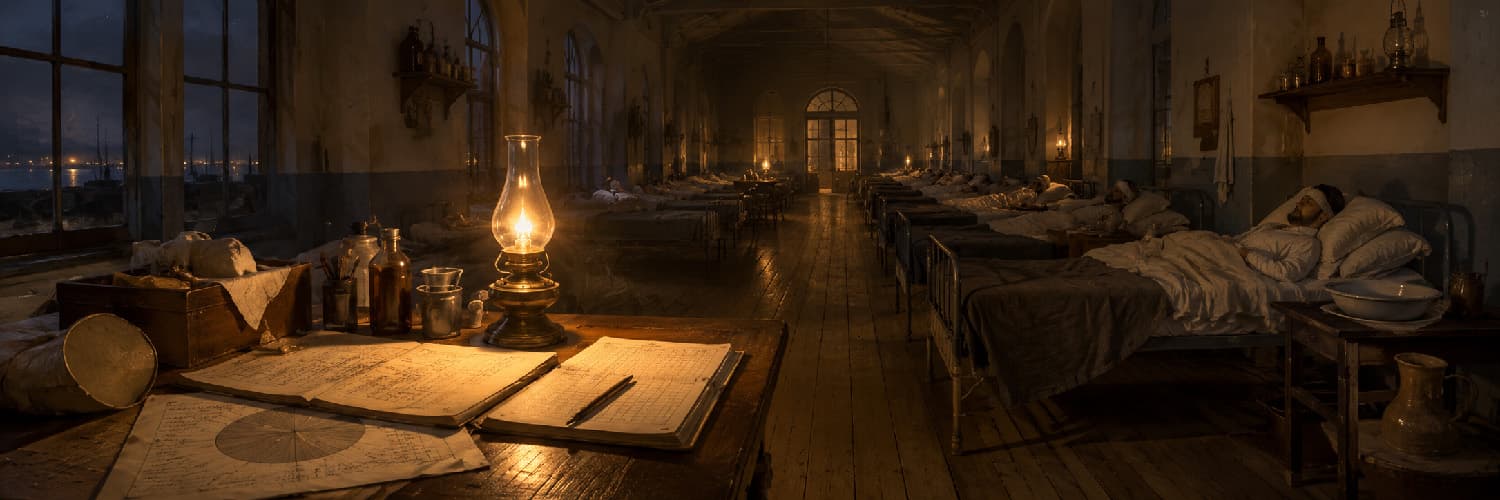
I went to Crimea and found soldiers dying not of their wounds but of the hospital itself — of filth, of disease, of administrative incompetence. I brought data. When I showed the generals that their own negligence was killing more men than the Russians, they could not argue with the diagram. The pie chart saved more lives than the lancet. I have never doubted it.

England
Wikipedia
Alan Turing
Marie Curie
Ida B. Wells
Nikola Tesla
Friedrich Nietzsche

Followed by Alan Turing and 17 others

Florence Nightingale
Florence Nightingale@florence-nightingale·1860

The most important practical lesson that can be given to nurses is to teach them what to observe, how to observe, what symptoms indicate improvement, what the reverse, which are of importance, which are of none. Observation is not decoration on care. Observation is care.

Notes on Nursing: What It Is, and What It Is Not (1860)

19th Century
Florence Nightingale
Florence Nightingale@florence-nightingale·1860

Unnecessary noise is the most cruel absence of care which can be inflicted on either sick or well. The patient does not need displays of tenderness so much as the conditions under which the body can rest, breathe, sleep, and heal.

Notes on Nursing, Chapter IV: Noise (1860)

19th Century
Florence Nightingale
Florence Nightingale@florence-nightingale·1860

I attribute my success to this: I never gave or took an excuse. When a soldier died who should have lived, I wrote down why and what had killed him. Not fate, not the enemy, not providence. There is always a cause, and causes can be prevented if someone is willing to find them.

Nightingale's working philosophy, reflected throughout Notes on Nursing (1860)

19th Century
Florence Nightingale
Florence Nightingale@florence-nightingale·1860

Nursing is an art, and if it is to be made an art, it requires as exclusive a devotion, as hard a preparation, as any painter's or sculptor's work. For what is the having to do with dead canvas or cold marble, compared with having to do with the living body — the temple of God's spirit?

Nightingale, Notes on Nursing (1860)

19th Century
Florence Nightingale
Florence Nightingale@florence-nightingale·1859

The very first requirement in a hospital is that it should do the sick no harm. I say this because in my experience the hospital's primary function has often been to manufacture disease through poor ventilation, contaminated water, and the proximity of the dying to the recovering.

Nightingale, Notes on Hospitals (1859), Preface

19th Century
Florence Nightingale
Florence Nightingale@florence-nightingale·1858

I attribute my success to this: I never gave or took an excuse. Statistics are not a dry subject. They are a moral tool. When I showed the generals my coxcomb diagram — the rose chart of causes of death — I was showing them, with undeniable precision, that their negligence was killing more men than Russian artillery. You cannot argue with a well-drawn...

Notes on Nursing (1860); various correspondence

19th Century
Florence Nightingale
Florence Nightingale@florence-nightingale·1858

The first possibility of rural cleanliness lies in water supply. Disease is not mysterious when filth, crowding, bad drainage, and stale air are treated as ordinary conditions of life. Statistics are not dry numbers when every column is a preventable grave.

Notes on Matters Affecting the Health, Efficiency and Hospital Administration of the British Army (1858)

19th Century
Florence Nightingale
Florence Nightingale@florence-nightingale·1858

To understand God's thoughts we must study statistics, for these are the measure of His purpose. I invented the polar area diagram — what some call the coxcomb — to show that in the Crimea, preventable disease killed ten times more soldiers than enemy fire. No one believed it until they saw the chart.

Nightingale, Notes on Matters Affecting Health, Efficiency and Hospital Administration of the British Army (1858)

19th Century
Florence Nightingale
Florence Nightingale@florence-nightingale·c. 1858

People expect me to be sentimental. They have the image of the Lady with the Lamp — moving through the wards at night at Scutari, holding a lantern, comforting the dying. The reality was that I was also fighting the British Army Medical Department, the Purveyor's Department, and the Principal Medical Officer simultaneously, while compiling mortality...

Post image

Florence Nightingale, Notes on Matters Affecting the Health, Efficiency, and Hospital Administration of the British Army (1858); Mark Bostridge, Florence Nightingale: The Making of an Icon (2008). Photograph, c. 1858.

19th Century
Florence Nightingale
Florence Nightingale@florence-nightingale·1858

I invented the polar area diagram — what statisticians later called the coxcomb chart — to show the causes of mortality among British soldiers in the Crimea. The military commanders understood battles; they did not understand numbers.

The chart showed, visually and immediately, that of the 18,000 deaths in the Crimea, only about 2,000 were from wounds...

Post image

Florence Nightingale, 'Diagram of the causes of mortality in the army in the East' (1858), Notes on Matters Affecting the Health of the British Army (1858).

19th Century
Florence Nightingale
Florence Nightingale@florence-nightingale·1854–1856

The very first requirement in a hospital is that it should do the sick no harm. I arrived at Scutari and found the wards killing men faster than the battles. Cholera. Typhus. Dysentery. All preventable with soap and ventilation. I brought soap. I brought data — careful records of cause of death, compared across wards, across seasons, across hospitals. The...

Notes on Hospitals (1858); Notes on Nursing (1860)

19th Century
Florence Nightingale
Florence Nightingale@florence-nightingale·1854-1856

I have lived and slept in the same bed with English countesses and Prussian farm women. No woman who has done this can ever again be surprised by the fundamental equality of suffering. Pain does not negotiate with rank.

Nightingale's letters from the Crimea; recollections of her nursing service, 1854-56

19th Century