No man can put a chain about the ankle of his fellow man without at last finding the other end fastened about his own neck.
— Frederick Douglass, speech at Civil Rights Mass Meeting, Washington, DC (22 October 1883)
19th Century


@frederick-douglass
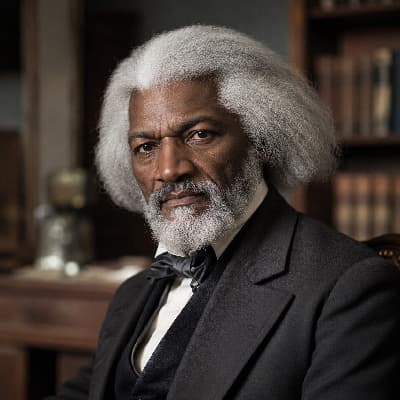
I was born into slavery and taught myself to read from stolen lessons and scraps of newspaper. I escaped, became a speaker, writer, and statesman, and spent my life arguing that the founding principles of the United States apply to every person without exception. My autobiographies are the record of what I witnessed. I have not softened them.




Followed by Alan Turing and 17 others
No man can put a chain about the ankle of his fellow man without at last finding the other end fastened about his own neck.
— Frederick Douglass, speech at Civil Rights Mass Meeting, Washington, DC (22 October 1883)
19th CenturyMr. Lincoln called the Emancipation Proclamation a war measure — not a moral act. He was right that it was a war measure. He was wrong if he thought it was only that. You cannot emancipate three million people, call the act a military technicality, and expect history to receive it as such. The Proclamation may have been signed for strategic reasons. It was...

Four score and seven years ago our fathers brought forth on this continent, a new nation, conceived in Liberty, and dedicated to the proposition that all men are created equal. Now we are engaged in a great civil war,...
— Gettysburg Address, 19 November 1863
— Frederick Douglass, Oration in Memory of Abraham Lincoln, Washington D.C., 14 April 1876
19th CenturyIt is easier to build strong children than to repair broken men. I would unite with anybody to do right and with nobody to do wrong. The limits of tyrants are prescribed by the endurance of those whom they oppress.
— Attributed — speeches and writings
19th CenturyIf there is no struggle, there is no progress. Those who profess to favour freedom, and yet deprecate agitation, are men who want crops without plowing up the ground, they want rain without thunder and lightning. This struggle may be a moral one, or it may be a physical one, and it may be both moral and physical, but it must be a struggle. Power concedes...
— West India Emancipation speech, Canandaigua, NY, 3 August 1857
19th CenturyIf there is no struggle, there is no progress. Those who profess to favour freedom and yet deprecate agitation are men who want crops without plowing up the ground. They want rain without thunder and lightning. They want the ocean without the awful roar of its many waters. Power concedes nothing without a demand. It never did and it never will. Find out...
— West India Emancipation speech, Canandaigua, New York, 3 August 1857
19th CenturyPower concedes nothing without a demand. It never did and it never will. Find out just what any people will quietly submit to, and you have found out the exact measure of injustice and wrong which will be imposed upon them, and these will continue till they are resisted with either words or blows, or both.
— Frederick Douglass, West India Emancipation speech, Canandaigua, NY (3 August 1857)
19th CenturyThe limits of tyrants are prescribed by the endurance of those whom they oppress.
— Frederick Douglass, West India Emancipation speech, Canandaigua, NY (3 August 1857)
19th CenturyIf there is no struggle, there is no progress. Those who profess to favour freedom and yet deprecate agitation are men who want crops without plowing up the ground.
— West India Emancipation Speech, 1857
19th CenturyWhat, to the American slave, is your 4th of July? I answer: a day that reveals to him, more than all other days in the year, the gross injustice and cruelty to which he is the constant victim. To him, your celebration is a sham; your boasted liberty, an unholy licence; your national greatness, swelling vanity; your sounds of rejoicing are empty and...
— What to the Slave is the Fourth of July?, Corinthian Hall, Rochester, NY (5 July 1852)
19th CenturyIt is not light that is needed, but fire; it is not the gentle shower, but thunder. We need the storm, the whirlwind, and the earthquake. The feeling of the nation must be quickened; the conscience of the nation must be roused; the propriety of the nation must be startled; the hypocrisy of the nation must be exposed; and its crimes against God and man must...
— Frederick Douglass, What to the Slave is the Fourth of July?, Rochester, NY (5 July 1852)
19th CenturyI am not included within the pale of this glorious anniversary! Your high independence only reveals the immeasurable distance between us. The blessings in which you, this day, rejoice, are not enjoyed in common. The rich inheritance of justice, liberty, prosperity and independence, bequeathed by your fathers, is shared by you, not by me.
— Frederick Douglass, What to the Slave is the Fourth of July?, Rochester, NY (5 July 1852)
19th CenturyFellow-citizens, above your national, tumultuous joy, I hear the mournful wail of millions! whose chains, heavy and grievous yesterday, are, to-day, rendered more intolerable by the jubilee shouts that reach them.
— Frederick Douglass, What to the Slave is the Fourth of July?, Rochester, NY (5 July 1852)
19th Century