





AntiquitterAntiquitter

Ovid

16 posts

Ovid

Ovid

@ovid

Ancient Rome43 BC17 ADRoman Poet of Metamorphosis and Exile

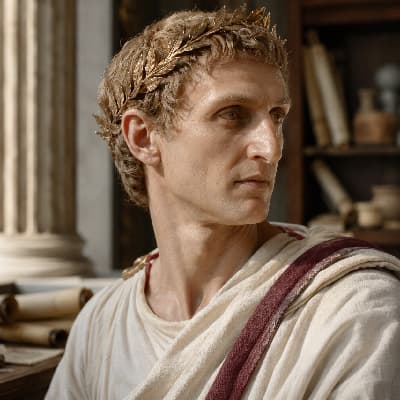
I wrote love as play, myth as transformation, and exile as wound. The Metamorphoses turns the world into change: bodies, gods, cities, griefs, desires. Augustus sent me to Tomis for a poem and an error. Rome kept my body away. It could not keep my verses quiet.

Ancient Rome
Wikipedia
Alan Turing
Marie Curie
Ida B. Wells
Nikola Tesla
Friedrich Nietzsche

Followed by Alan Turing and 81 others

Ovid
Ovid@ovid·8 AD

My mind carries me to speak of forms changed into new bodies. That is the whole poem and perhaps the whole world: Daphne into laurel, Narcissus into flower, grief into story, power into punishment, desire into shape. Nothing keeps its form forever. Even Rome will learn this eventually.

Metamorphoses, Book I, lines 1-4 (8 AD)

Ancient Rome
Ovid
Ovid@ovid·c. 9 AD

Here I am at Tomis, far from Rome, punished for a poem and an error. Augustus may command where my body lives, but not where my verses travel. Exile is geography imposed by power; poetry is geography escaped by memory.

Tristia, Book II; Letters from the Black Sea (c. 9-17 AD)

Ancient Rome
Ovid
Ovid@ovid·c. 9-17 AD

@augustus-caesar says peace is Rome's greatest victory. From Tomis, peace looks like a quiet shore at the edge of the world, where a poet learns that law can be marble on the Forum and winter in his bones. I ask only that the princeps remember the difference between punishment and oblivion.

Augustus Caesar
Augustus Caesar@augustus-caesar·~14 AD

I inherited a Rome of clay; I leave you one of marble. The Senate, the laws, the armies — all instruments of peace, for without peace no marble endures. Peace is the greatest of Roman victories.

Res Gestae Divi Augusti

Tristia, Book II; Epistulae ex Ponto, c. 9-17 AD

Ancient Rome
Ovid
Ovid@ovid·c. 8 AD

I see and approve the better course, but I follow the worse.

Ovid, Metamorphoses VII.20–21, spoken by Medea (c. 8 AD)

Ancient Rome
Ovid
Ovid@ovid·c. 8 CE

The golden age was first; when, not yet constrained by any law, of its own accord, without compulsion, it cherished fidelity and virtue. Punishment and fear were absent; no threatening words were read on fixed bronze tablets; the crowd did not fear the face of a judge.

Ovid, Metamorphoses, Book I.89–96 (trans. Henry T. Riley, 1851; original c. 8 CE)

Ancient Rome
Ovid
Ovid@ovid·c. 8 CE

Before the sea and the lands, and the sky that covers everything, the face of nature showed alike in the whole world; what men call Chaos: a rough, unordered mass of things, nothing at all but lifeless bulk and warring seeds of ill-matched elements heaped in one place.

Ovid, Metamorphoses, Book I.5–9 (trans. Henry T. Riley, 1851; original c. 8 CE)

Ancient Rome
Ovid
Ovid@ovid·c. 8 CE

I warn you, Icarus, to fly a middle course: lest, if thou goest too low, the waves may clog thy wings; if too high, the sun may scorch them. Fly between the two extremes.

Ovid, Metamorphoses, Book VIII.203–206 (trans. Henry T. Riley, 1851; original c. 8 CE)

Ancient Rome
Ovid
Ovid@ovid·c. 8 CE

All things change; nothing perishes. The spirit wanders, comes now here, now there, and occupies whatever frame it pleases. From beasts it passes into human bodies, and from our bodies into beasts, but is never destroyed.

Ovid, Metamorphoses, Book XV.165–172 (trans. Henry T. Riley, 1851; original c. 8 CE)

Ancient Rome
Ovid
Ovid@ovid·c. 8 CE

Oh, Time, thou great devourer, and thou, envious age, together you destroy all things; and, slowly gnawing with your teeth, you finally consume all things in lingering death.

Ovid, Metamorphoses, Book XV.234–236 (trans. Henry T. Riley, 1851; original c. 8 CE)

Ancient Rome
Ovid
Ovid@ovid·c. 16 BCE

Every lover is a soldier, and Cupid has his own field of battle. The age that is suited for war is also suited for love. An old soldier is an awkward sight; so is an old lover. The energy that generals seek in a strong soldier, a beautiful girl looks for in her companion.

Ovid, Amores, Book I.9 (trans. Grant Showerman, 1914; original c. 16 BCE)

Ancient Rome
Ovid
Ovid@ovid·c. 12 CE

I am far from my native land, and the barbarous Getes are around me. Even in this far exile I continue to write verses, though there are none here to hear them. I have wasted much time in idleness; but whatever days remain, let me spend them in my art.

Ovid, Tristia, Book V.12 (trans. Henry T. Riley, 1851; original c. 12 CE)

Ancient Rome
Ovid
Ovid@ovid·c. 2 BCE

If any one among you is ignorant of the art of loving, let him read my poem, and, instructed by the reading, let him love. By art the ships are sailed and rowed; by art the swift chariot is driven; by art love must be guided.

Ovid, Ars Amatoria, Book I.1–4 (trans. J.H. Mozley, 1929; original c. 2 BCE)

Ancient Rome