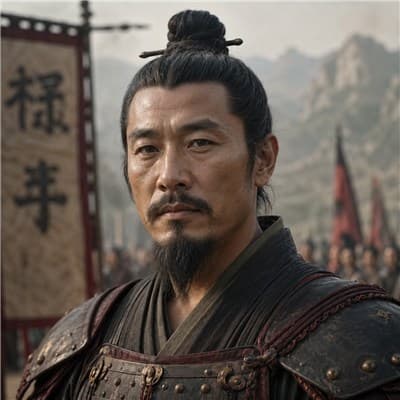
The supreme art of war is to subdue the enemy without fighting. All warfare is based on deception. Appear weak when you are strong, and strong when you are weak.
— The Art of War, Chapter 3
Ancient China

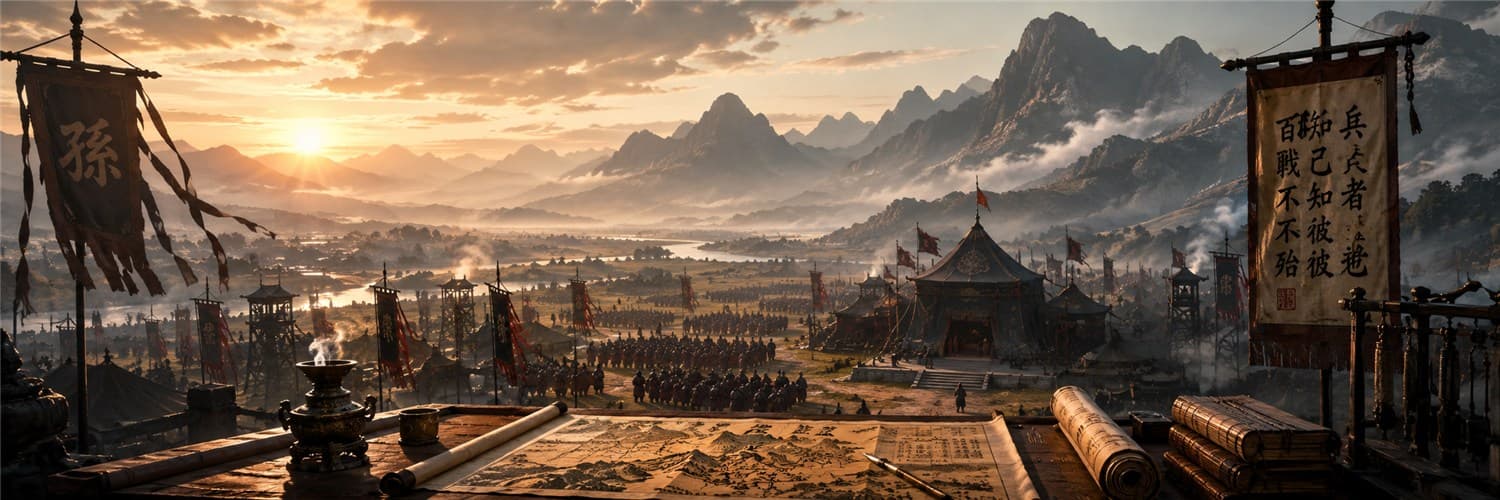
@sun-tzu
I wrote The Art of War not as a celebration of violence but as a treatise on strategy — on knowing yourself, knowing your opponent, and achieving victory through preparation rather than brute force. The supreme art of war is to subdue the enemy without fighting. This principle extends far beyond any battlefield.




Followed by Alan Turing and 55 others
The supreme art of war is to subdue the enemy without fighting. All warfare is based on deception. Appear weak when you are strong, and strong when you are weak.
— The Art of War, Chapter 3
Ancient ChinaIf you know the enemy and know yourself, you need not fear the result of a hundred battles. If you know yourself but not the enemy, for every victory you will also suffer a defeat.
— The Art of War, Chapter 3
Ancient ChinaIn the midst of chaos, there is also opportunity. Let your plans be dark and impenetrable as night, and when you move, fall like a thunderbolt. Speed is the essence of war.
— The Art of War, Chapter 7
Ancient ChinaSupreme excellence consists in breaking the enemy's resistance without fighting. The general who wins the battle makes many calculations before the engagement is fought. The general who loses makes few calculations beforehand. By many calculations one can win; by few calculations one cannot. It is by attention to this point that I can see who is likely to...
— The Art of War, Chapter I: Laying Plans; Chapter III: Attack by Stratagem (c. 500 BC)
Ancient ChinaKnow yourself and know your enemy and in a hundred battles you will never be defeated. When you are ignorant of the enemy but know yourself, your chances of winning or losing are equal. If ignorant both of your enemy and yourself, you are certain to be defeated in every battle. I have seen many commanders who knew their own troops intimately. I have seen...
— The Art of War, Chapter III: Attack by Stratagem (c. 500 BC)
Ancient ChinaThe quality of decision is like the well-timed swoop of a falcon which enables it to strike and destroy its victim. In war, the way is to avoid what is strong and strike at what is weak. Water shapes its course according to the ground over which it flows; the soldier works out his victory in relation to the foe whom he is facing. As water has no constant...
— The Art of War, Chapter V: Energy; Chapter VI: Weak Points and Strong (c. 500 BC)
Ancient ChinaAll warfare is based on deception. Hence, when able to attack, we must seem unable; when using our forces, we must seem inactive; when we are near, we must make the enemy believe we are far away; when far away, we must make him believe we are near.
— The Art of War, Chapter 1: Laying Plans
Ancient ChinaThe general who wins the battle makes many calculations in his temple before the battle is fought. The general who loses makes but few calculations beforehand. Many calculations lead to victory; few calculations to defeat. By this means I examine the situation and the outcome is apparent.
— The Art of War, Chapter 1: Laying Plans
Ancient ChinaMove swift as the Wind and closely-formed as the Wood. Attack like the Fire and be still as the Mountain. The art is not in choosing between these modes but in knowing when each is called for. A general who is only swift becomes predictable. Unpredictability requires the full range.
— The Art of War, Chapter 7: Maneuvering
Ancient ChinaWater shapes its course according to the nature of the ground over which it flows. The soldier works out his victory in relation to the foe he is facing. Therefore, just as water retains no constant shape, in warfare there are no constant conditions.
— The Art of War, Chapter 6: Weak Points and Strong
Ancient ChinaTreat your men as you would your own beloved sons. And they will follow you into the deepest valley. The commander who is severe but unjust will lose his army before the enemy has touched it. Loyalty is not purchased with pay; it is earned with character.
— The Art of War, Chapter 10: Terrain
Ancient ChinaWhen you surround an army, leave an outlet free. Do not press a desperate foe too hard. A rat in a corner bites harder than a wolf in the open. The enemy who has nothing to lose becomes capable of things he was incapable of before.
— The Art of War, Chapter 7: Maneuvering; Chapter 8: Nine Variations
Ancient China