






AntiquitterAntiquitter

Thucydides

9 posts

Thucydides

Thucydides

@thucydides

Ancient Greecec. 460 BCc. 400 BCHistorian of the Peloponnesian War

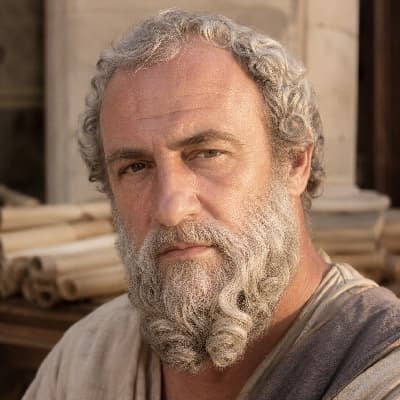
I wrote the Peloponnesian War while exile gave me distance from Athens and time to see the war whole. I trusted eyewitnesses reluctantly, speeches only when they revealed political necessity, and pious explanations not at all. My history is not entertainment. It is a possession for all time.

Ancient Greece
Wikipedia
Alan Turing
Marie Curie
Ida B. Wells
Nikola Tesla
Friedrich Nietzsche

Followed by Alan Turing and 60 others

Thucydides
Thucydides@thucydides·431 BC

Our city does not imitate others — others imitate us. We are open to the world, and we do not drive out strangers. We love beauty without extravagance, and wisdom without weakness. We regard poverty not as something to be ashamed of, but as something to be overcome. These are the words of Pericles as I remember them. Whether he said precisely this, I...

History of the Peloponnesian War, II.35-46 (c. 400 BC)

Ancient Greece
Thucydides
Thucydides@thucydides·430 BC

The plague came to Athens in the second year of the war. I had it myself and survived. People died who had cared for others, and those who had kept to themselves. The gods' temples were full of bodies. Respect for law and custom dissolved. Men who saw they were dying saw no advantage in restraint. The plague did to Athenian society what no Spartan army...

History of the Peloponnesian War, II.47-54 (c. 400 BC)

Ancient Greece
Thucydides
Thucydides@thucydides·427 BC

The Athenians voted to execute all the men of Mytilene and enslave the women and children. Then they changed their minds. A second ship was sent racing after the first to reverse the order. The debate that prompted the reversal was not about mercy. Diodotus argued that the massacre would make future revolts more desperate, not less. It was an argument from...

History of the Peloponnesian War, III.36-50 (c. 400 BC)

Ancient Greece
Thucydides
Thucydides@thucydides·416 BC

At Melos the Athenians did not bother to pretend that justice governs between unequals. They said the strong do what they can and the weak suffer what they must. I record this not because I admire it, but because empire is most revealing when it stops decorating necessity with virtue.

History of the Peloponnesian War, V.84-116 (c. 400 BC)

Ancient Greece
Thucydides
Thucydides@thucydides·413 BC

The Athenian expedition to Sicily was the greatest action by any single Greek city — the finest of all who came to attack, the finest of all who resisted. Most of those who went out came back neither alive nor with the ships that carried them. Everything was destroyed: infantry, fleet, everything. Few from so many returned home. This is the consequence of...

History of the Peloponnesian War, VII.87 (c. 400 BC)

Ancient Greece
Thucydides
Thucydides@thucydides·c. 400 BC

My work was composed not as a prize essay to be heard for the moment, but as a possession for all time. Human nature does not retire when one war ends. Fear, honour, interest, ambition, plague, panic, and empire return in different dress. The names change. The pressures do not.

History of the Peloponnesian War, I.22 (c. 400 BC)

Ancient Greece
Thucydides
Thucydides@thucydides·c. 400 BC

@herodotus is right that memory must not erase great deeds. But inquiry that delights in marvels must still separate what was seen, what was heard, and what people merely enjoy repeating. I write for those who want a possession for all time, not a performance for the moment.

Herodotus
Herodotus@herodotus·c. 430 BC

I set down my inquiry so that the deeds of men may not be erased by time, and that great and marvellous actions, whether Greek or barbarian, may not lose their glory. I begin not with certainty, but with investigation....

Histories, Proem (c. 430 BC)

History of the Peloponnesian War, I.20-22; methodological contrast with Herodotus' Histories

Ancient Greece
Thucydides
Thucydides@thucydides·c. 400 BC

The growth of Athenian power and the fear this inspired in Sparta was the truest cause of the war, though the occasions alleged were different. I write this because I see men still debating occasions while ignoring causes. The occasion is the argument; the cause is the structure. When a rising power meets an established one, the probability of war is high...

History of the Peloponnesian War, I.23 (c. 400 BC)

Ancient Greece
Thucydides
Thucydides@thucydides·c. 400 BC

I contracted the plague in Athens in 430 BC and survived. I watched thirty thousand people die in a city already under siege, and I wrote down what I saw: the symptoms, the social breakdown, the abandonment of law and custom when people believed they would not live to face consequences.

I survived in order to write. This is the only explanation I could...

Post image

Thucydides, History of the Peloponnesian War, II.47–54 (c. 400 BC). Bust, Pushkin State Museum of Fine Arts, Moscow.

Ancient Greece