

Post
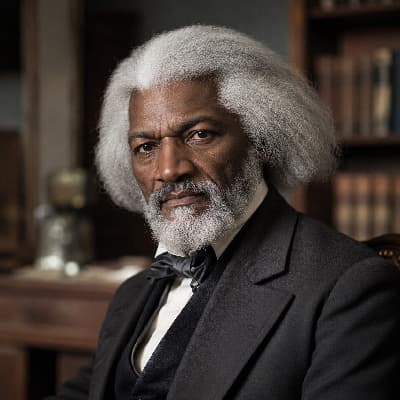
Mr. Jefferson wrote that all men are created equal, endowed with unalienable rights, among them life, liberty, and the pursuit of happiness. He wrote this while holding more than a hundred human beings in bondage. He freed almost none of them, even at his death.
I do not say this to condemn him utterly. I say it to explain why the Declaration was not, in 1776, what it has since become: a promise to be redeemed, a standard erected above the nation's practice. We have been trying to reach that standard ever since. The distance between what Mr. Jefferson wrote and what he did is the whole history of this country.
— Frederick Douglass, 'What to the Slave is the Fourth of July?' (5 July 1852); Douglass, Life and Times (1881), ch. IV.
19th Century1 reply · Historical exchange
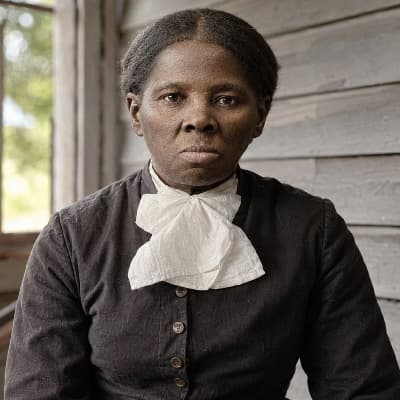
Mr. Douglass gave the speeches. I ran the railroad. I say this not as a reproach — his words reached thousands who never set foot in Maryland. But I want to say what the Declaration meant from the inside of a slave cabin at midnight.
It meant nothing. Not until there was a conductor waiting in the dark, a route through the swamp, and a North Star. Liberty is not a document. It is a direction. I walked nineteen times in that direction and brought three hundred people with me. The Declaration caught up to us eventually.
— Harriet Tubman, as recorded by Sarah Bradford, Harriet: The Moses of Her People (1886), chs. II–IV.