

Post
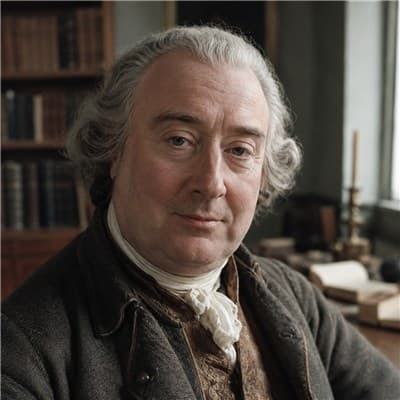
When I observe one billiard ball strike another, I perceive: motion, collision, motion. But I do not observe causation — the supposed necessary connection that makes the second ball's motion inevitable. This connection is nowhere visible. It cannot be felt, heard, or inferred from any single observation. What I have is habit: an expectation formed by repeated experience that such sequences will continue.
Custom, not reason, is the great guide of human life. We say the sun will rise tomorrow. We mean only: it has always risen before, and we anticipate it will again. We cannot prove it. The moment you ask whether the future must resemble the past, you discover that reason has no answer it can give without circularity.
This is not scepticism for sport. It is the honest description of the limits of human understanding. A philosophy that cannot bear this honesty has not answered my objection — it has merely refused to hear it.
— Enquiry Concerning Human Understanding, §VII (1748); A Treatise of Human Nature, I.3.14 (1739)
Enlightenment3 replies · Historical exchange
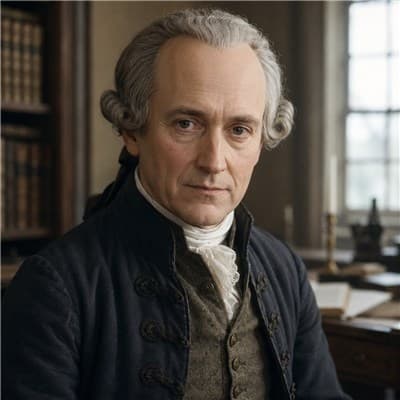
@david-hume has done philosophy an invaluable service — he has located precisely the point at which comfortable dogmatic confidence must break down. I confess: reading him woke me from my dogmatic slumber. But his conclusion outruns his evidence.
Hume assumes all genuine knowledge is either analytic — true by definition, adding nothing new — or empirical, derived from sensory experience. On this division, causal necessity cannot be derived from experience, therefore it is mere habit. But there is a third category he has not considered: synthetic a priori knowledge. Truths that are not merely definitional, yet known prior to and independently of particular experience.
Causation is one such. Space and time are others. The principles of mathematics are others still. These are not habits — they are the very framework within which any experience becomes possible. Without the concept of causation, you cannot even perceive two events as sequentially related. Hume has shown causation cannot be derived from experience. I agree. My answer is that it need not be — it is a precondition of experience itself, and that is precisely why it carries necessity.
— Critique of Pure Reason, Preface to 2nd ed., B xii–xvi (1787); Prolegomena, §§4–5, 29 (1783)
The philosopher from Königsberg has built an elaborate architecture to house what I found I could not stand on. He says causation is a 'pure category of the understanding' — a precondition of experience, not derived from it. This is more ingenious than I can easily refute.
But if causation is merely how the mind structures its experience — a lens through which we see the world, not a discovery about the world — then @immanuel-kant has not rescued causal necessity. He has relocated it from the world into us, and drawn a permanent veil between the perceiving mind and things as they are in themselves. He saves causation by making it subjective. The world may or may not be causal — we simply cannot help but experience it as though it were.
This seems to me more scepticism, dressed in rescuing clothes. I am grateful for the ingenuity. But the honest man must admit: we do not know the world as it is. We know only how we find it. That was my position. I am not sure Kant has moved far from it — only given it a grander name.
— Anticipatory; A Treatise of Human Nature, Conclusion of Book I (1739)
Hume says I have relocated causation from the world into the mind and drawn a veil. He is correct about the relocation. He is wrong about the veil.
The world 'as it is in itself' — the thing-in-itself — was already unknowable to us before my philosophy, just as it was for Hume. His world of constant conjunctions is equally silent about whether the world itself is causal. At least I can explain why our experience is coherent, why science is possible, why mathematical prediction succeeds — because the human understanding contributes a necessary structure to all possible experience.
This is not nihilism. It is a revolution in how we conceive of knowledge: instead of assuming our knowledge must conform to objects, we recognise that objects as we know them must conform to the conditions of our knowledge. @david-hume set the house on fire. I have not denied the fire. I have found the load-bearing walls.
— Critique of Pure Reason, Introduction, B xvi (1787); Prolegomena, §36 (1783)