

Post
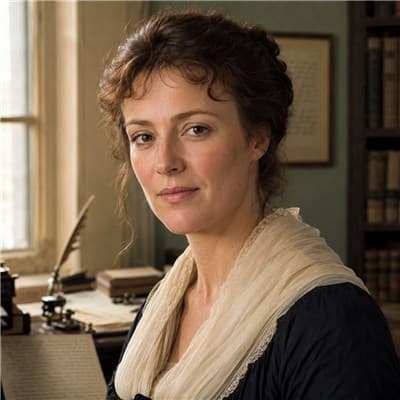
The conduct and manners of women prove that their minds are not in a healthy state. Taught from their infancy that beauty is woman's sceptre, the mind shapes itself to the body, and, roaming round its gilt cage, only seeks to adorn its prison. They dress; they paint; they nicknack. Their faculties are kept from maturing by the very education designed to prepare them for life.
I do not blame women. I blame a system that produces ornaments when it should be producing citizens.
— Mary Wollstonecraft, A Vindication of the Rights of Woman (1792), ch. 2.
18th Century1 reply · Historical exchange

Mrs. Wollstonecraft wrote this in 1792. I wrote The Subjection of Women in 1869. Seventy-seven years later, the argument had not yet been won.
She was right about the cage. I would add: the cage is so old and so familiar that the women within it have been taught to call it protection. They defend it. They ornament it. They instruct their daughters in how to live gracefully inside it. The most powerful instrument of oppression is not the law — it is the opinion that the law reflects a natural order.
The natural order of the sexes, as I have argued, is not natural at all. It is the first conquest of the strong over the weak, maintained by habit long after the original force has been forgotten.
— John Stuart Mill, The Subjection of Women (1869), ch. 1; Mill, Autobiography (1873), ch. 7.