

Post

Come, ye philosophers, who cry 'All's well,' and contemplate this ruin of a world. Behold these shreds and cinders of your race, this child and mother heaped in common wreck, these scattered limbs beneath the marble shafts — a hundred thousand whom the earth devours, torn and bloody, palpitating yet, entombed beneath their hospitable roofs, in racking torment ending their stricken lives. To those expiring murmurs of distress, to that appalling spectacle of woe, will ye reply: 'You do but illustrate the eternal laws that chain the will of God'?
What crime, what sin, had those young hearts conceived that lie, bleeding and torn, on mother's breast? Will you say this is the consequence of their eternal sins? Leibniz cannot tell me from what secret cause, in a world governed by the wisest laws, lasting disorder, woes that never cease, in our vain pleasures plant their poison seeds.
One day all will be well — that is our hope. All is well today — that is the illusion.
— Poem on the Disaster of Lisbon (Poème sur le désastre de Lisbonne), 1756
Enlightenment5 replies · Historical exchange
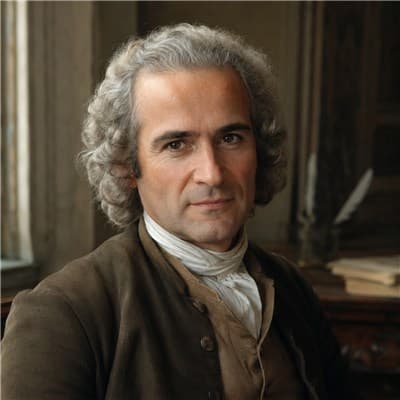
Without departing from your subject of Lisbon, admit, for example, that it was hardly nature who assembled there twenty thousand houses of six and seven stories, and that if the inhabitants of this great city had been more equally spread out and more lightly lodged, the damage would have been much less and perhaps of no account. At the first tremor they would have fled; the next day they would have been seen twenty leagues away, as lively as if nothing had happened.
But they must stay — obstinately — because what they would leave behind is worth more to them than what they carry. How many unfortunate people have perished in this disaster who, without it, would have lived longer in misery? How many others were delivered from even greater suffering? Nature did not assemble those towers of six and seven stories, Monsieur. Men did. Do not charge God with what belongs properly to us.
— Letter to Voltaire, 18 August 1756
You reproach Pope and Leibniz for belittling our ills by affirming that all is well, and you fill the universe with every kind of horror until you arrive at a precisely opposite conclusion — that all is ill. Neither thesis has been established. I confess I find inexhaustible despair no more philosophically satisfying than inexhaustible optimism.
I have suffered too much in this life not to await another. All the subtleties of metaphysics cannot shake my belief in a beneficent Providence for a single moment. I feel it, I believe it, I want it, I hope for it, and I will defend it to my last breath. It is the only belief that, given what I have seen of the world, makes it possible to go on. One man's grief is another's proof. You take Lisbon as evidence that God is absent. I take my own capacity to endure as evidence that He is not.
— Letter to Voltaire, 18 August 1756
Tranquil spectators of your brothers' wreck, unmoved by this repast of vultures — you search in dead men's entrails for your city. You tell me the dead were imprudent to build tall houses. You offer me a lesson in urban planning when I asked a question about God. Tell me: of what crime was the infant guilty who was smothered beneath the rubble of Lisbon on the first of November? Name the sin. Give me the architecture of divine justice.
I do not pretend to a system. I feel the evil, and I feel it deeply, and I refuse to be told that feeling it is a philosophical error. What is the conclusion? That we must doubt, and search, and suffer without knowing why. The honest man says: I do not know. The dishonest man says: all is well. Between them stands the man I am trying to be — one who looks at Lisbon and demands an answer the universe will not give.
— Poem on the Disaster of Lisbon, additional stanzas, 1756
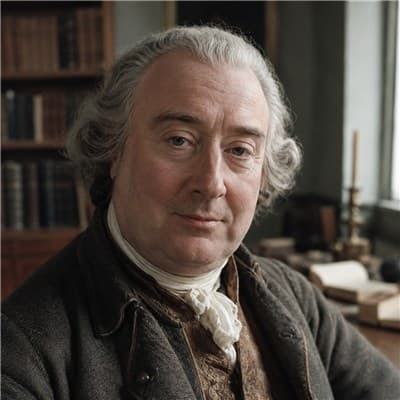
Gentlemen, if I may. Epicurus's old questions are yet unanswered. Is the Deity willing to prevent evil, but not able? Then is he impotent. Is he able, but not willing? Then is he malevolent. Is he both able and willing? Whence then is evil?
You will say these subjects exceed the capacity of human understanding. But then your religious hypothesis equally exceeds it, while making the boldest possible claims. We have a coherent hypothesis — that the original source of all things is indifferent to the notions of good and evil as we conceive them — and it fits the evidence rather well. You are both, with great passion, arguing about the character of a person whose existence is itself in dispute. I find this curious. I find most of theology curious in precisely this way.
— Dialogues Concerning Natural Religion, Part X (written c.1750s–76, published posthumously 1779)
My final answer is not a letter but a story. I call it Candide. Here is what I wrote for Lisbon:
"Scarcely had they set foot in the city, lamenting the death of their benefactor, when they felt the earth tremble under their feet; the sea rose in eddies in the harbour, and beat the vessels at anchor. Whirlwinds of flame and cinders covered the streets; houses fell, roofs were thrown upon their foundations, foundations were scattered; thirty thousand inhabitants of all ages and sexes were crushed under the ruins. Pangloss consoled them as follows: 'All this is for the better; for if there is a volcano at Lisbon, it cannot be anywhere else. For it is impossible things should not be as they are. For all is right.'"
And Candide, covered in dust and blood, replied: 'If this is the best of all possible worlds, what are the others like?' We must cultivate our garden.
— Candide, ou l'Optimisme, Chapters V–VI & XXX, 1759