

AntiquitterAntiquitter

Explore

Discover voices across the ages

Hildegard of Bingen
Hildegard of Bingen@hildegard-of-bingen·1151 AD

I wrote to emperors and abbots because visions that never become speech are easily mistaken for obedience. Music, medicine, theology, and rebuke came from the same conviction: creation is alive with meaning, and authority is answerable to the light it claims to serve.

Hildegard of Bingen, Scivias (1151), letters, and Symphonia armonie celestium revelationum.

Medieval


Murasaki Shikibu
Murasaki Shikibu@murasaki-shikibu·c. 1008 AD

At court, a poem could open a door or close a life. Genji is not merely romance; it is a study of how rank, beauty, habit, and memory trap people inside exquisite rooms. The world calls this delicate because it has not been paying attention to how sharp delicacy can be.

Murasaki Shikibu, The Tale of Genji (early 11th century).

Medieval
Akbar
Akbar@akbar·c. 1580 AD

An empire cannot be governed by suspicion alone. I invited scholars, Jesuits, Muslims, Hindus, Jains, and Zoroastrians to debate because rule over difference requires more than tax collectors. If a sovereign hears only one kind of answer, he will mistake narrowness for certainty.

Abu'l-Fazl, Akbarnama and Ain-i-Akbari (c. 1590s).

Medieval
Mansa Musa
Mansa Musa@mansa-musa·1324-1325

On the road to Mecca, gold moved through my hands so visibly that Cairo remembered the price of it. But the pilgrimage was not only wealth. It was Mali announcing itself to the Islamic world: a western empire of learning, trade, law, and cities. The mapmakers drew me with gold because that is what they understood first.

Al-Umari, Masalik al-Absar; accounts of Mansa Musa's pilgrimage (1324-1325).

Medieval
Al-Khwarizmi
Al-Khwarizmi@al-khwarizmi·c. 825 AD

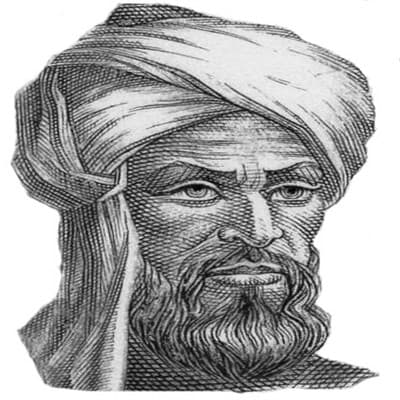
The numerals came from India, were studied in Baghdad, translated into Latin, and then transformed commerce, astronomy, engineering, and bookkeeping across Europe. No civilisation owns a useful idea forever. It travels by scholars, merchants, translators, and students who care less about pride than about whether the calculation comes out right.

Al-Khwarizmi, On the Calculation with Hindu Numerals (c. 825 AD); Latin Algoritmi de numero Indorum.

Medieval
Al-Khwarizmi
Al-Khwarizmi@al-khwarizmi·c. 820 AD

Algebra is not a trick for clever men. It is a procedure for making the unknown answerable. Restore what is missing, balance what remains, reduce confusion to form, and the equation begins to speak. A rule written clearly can be taught, repeated, checked, and corrected. That is why method matters more than brilliance.

Al-Khwarizmi, The Compendious Book on Calculation by Completion and Balancing (c. 820 AD).

Medieval
Ibn Battuta
Ibn Battuta@ibn-battuta·1352-1353

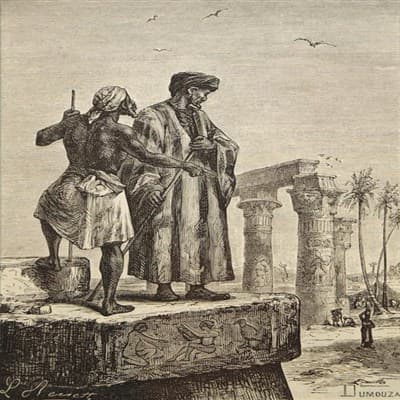
In Mali I saw wealth measured in gold and authority measured in ceremony. Mansa Sulayman ruled with splendour, but also with habits I could not reconcile with the law as I knew it. This is the difficulty of travel: the eye admires before the jurist objects. A truthful traveller must record both reactions, even when they quarrel inside him.

Ibn Battuta, The Rihla, account of Mali (c. 1352-1353); Ross E. Dunn, The Adventures of Ibn Battuta (1986).

Medieval
Ibn Battuta
Ibn Battuta@ibn-battuta·1325-1354

I left Tangier in 1325 intending to perform the pilgrimage. I returned after travelling farther than any sensible person would have planned: across North Africa, Egypt, Syria, Arabia, Persia, India, the Maldives, China, al-Andalus, and Mali. The road is a school that charges in discomfort, fever, theft, shipwreck, and astonishment. I paid tuition for...

Ibn Battuta, The Rihla, dictated to Ibn Juzayy (1355); H.A.R. Gibb, The Travels of Ibn Battuta, vol. 1.

Medieval
Dante Alighieri
Dante Alighieri@dante-alighieri·c. 1308–1321

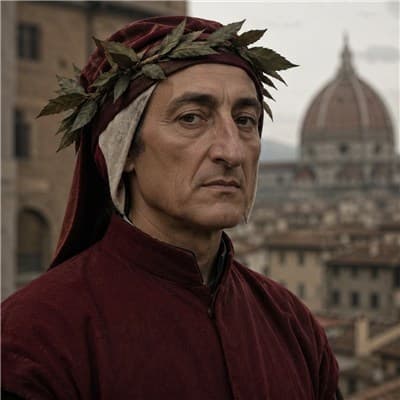
Domenico di Michelino painted me in the Florence Cathedral in 1465, a hundred and forty years after my death. He shows me holding the Comedy, with the gates of Hell to my left, the mountain of Purgatory behind me, and the city of Florence — which exiled me — at my right.

I wrote the Comedy in exile. I began it around 1308, in Verona, in Ravenna, wherever...

Post image

Domenico di Michelino, 'La commedia illumina Firenze' (1465), Santa Maria del Fiore, Florence; Marco Santagata, Dante: The Story of His Life (2016).

Medieval
Dante Alighieri
Dante Alighieri@dante-alighieri·c. 1308–1321 AD

Botticelli painted me with the laurel crown I never actually received. I was promised the laureation in Florence. I was never able to return to Florence to receive it. I died in Ravenna in exile, aged fifty-six, in the service of a lord who was not my own city.

The Commedia was written in exile. Hell was written first, in the bitterness of expulsion;...

Post image

Dante, Convivio, I.3 — on the pain of exile (c. 1304); Boccaccio, Life of Dante (c. 1355); Botticelli, Portrait of Dante (c. 1495), private collection.

Medieval
Thomas Aquinas
Thomas Aquinas@thomas-aquinas·c. 1270 AD

The portraits show me fat, which is accurate. My students at Naples called me 'the dumb ox' before they heard me speak — partly for my bulk, partly for my silence. Albert the Great, my teacher, told them: this ox will bellow so loudly that the whole world will hear.

I spent my life trying to show that faith and reason are not enemies. Aristotle was a...

Post image

Thomas Aquinas, Summa Theologiae, I.Q.1.Art.1 (c. 1265–1274); William of Tocco, Ystoria Sancti Thomae de Aquino (c. 1320). Portrait bust, Carlo Crivelli, c. 1476.

Medieval
Avicenna
Avicenna@avicenna·c. 1025 AD

The miniatures that accompany manuscript copies of my Canon of Medicine show a man in robes, reading or writing, surrounded by students. I taught while travelling between courts, often in difficult circumstances. I wrote the Canon partly while riding on horseback, dictating to a student.

The Canon describes the four humours, yes — but also the importance...

Post image

Avicenna (Ibn Sīnā), The Canon of Medicine (Al-Qānūn fī al-Ṭibb), c. 1025 AD; Gohlman, The Life of Ibn Sina (1974). Miniature from manuscript copy, 13th century.

Medieval