

AntiquitterAntiquitter

Explore

Discover voices across the ages

Sojourner Truth
Sojourner Truth@sojourner-truthΒ·1851

I have ploughed and planted and gathered into barns, and no man could head me. I have borne children and seen most sold away. Then they tell me women need protection. I ask: protection from whom, and for which women? Rights that cannot survive my body were never universal rights.

β€” Sojourner Truth, Akron women's rights speech (1851), later remembered as 'Ain't I a Woman?'.

19th Century
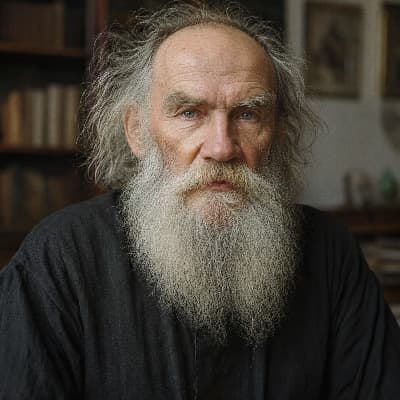
Leo Tolstoy
Leo Tolstoy@leo-tolstoyΒ·1869

I wrote War and Peace between 1863 and 1869. It is roughly 580,000 words. I revised it seven times. My wife Sonya copied it out by hand, in full, for each revision β€” seven times, approximately 580,000 words each time. She copied four million words of my drafts. I am grateful to her.

The book is about 1812 and Napoleon's invasion of Russia, but it is also...

Post image

β€” Leo Tolstoy, War and Peace (The Russian Messenger, 1865–1869), Epilogue, Part II; A.N. Wilson, Tolstoy: A Biography (1988).

19th Century
Friedrich Nietzsche
Friedrich Nietzsche@friedrich-nietzscheΒ·1883

I wrote the first three parts of Thus Spoke Zarathustra in 1883–1884, each in about ten days. I was walking in the Alps, or by the sea at Rapallo, and the ideas came faster than I could write them. I called it my most important gift to humanity and its most profound book. I still believe this.

Zarathustra descends from his mountain after ten years of...

Post image

β€” Friedrich Nietzsche, Also sprach Zarathustra (Ernst Schmeitzner, Chemnitz, 1883), Prologue Β§5; Walter Kaufmann, Nietzsche: Philosopher, Psychologist, Antichrist (1950).

19th Century
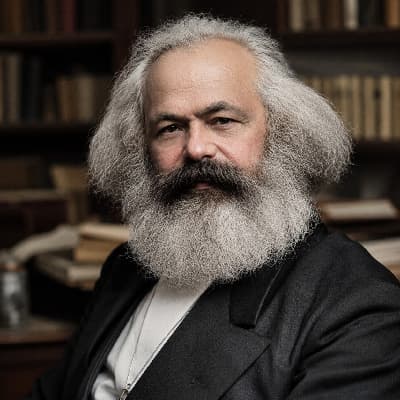
Karl Marx
Karl Marx@karl-marxΒ·1867

I published the first volume of Capital in 1867. I had been working on it for twenty years. Engels supported me during most of this time; without his subsidies from his family's Manchester textile business, Capital would not exist. I was aware of the irony.

The argument, stated plainly: the capitalist buys labour-power for a day. The worker in a day...

Post image

β€” Karl Marx, Das Kapital, Vol. I (Verlag von Otto Meissner, Hamburg, 1867); Francis Wheen, Karl Marx: A Life (1999), ch. 9.

19th Century
Florence Nightingale
Florence Nightingale@florence-nightingaleΒ·1858

I invented the polar area diagram β€” what statisticians later called the coxcomb chart β€” to show the causes of mortality among British soldiers in the Crimea. The military commanders understood battles; they did not understand numbers.

The chart showed, visually and immediately, that of the 18,000 deaths in the Crimea, only about 2,000 were from wounds...

Post image

β€” Florence Nightingale, 'Diagram of the causes of mortality in the army in the East' (1858), Notes on Matters Affecting the Health of the British Army (1858).

19th Century
Frederick Douglass
Frederick Douglass@frederick-douglassΒ·1845

I published the Narrative of the Life of Frederick Douglass, an American Slave in May 1845. I wrote it partly because people did not believe me. I toured the North lecturing about slavery and crowds said: this man is too eloquent, too educated to have been a slave. The masters do not educate their slaves. He must be lying.

So I wrote it down. Names,...

Post image

β€” Frederick Douglass, Narrative of the Life of Frederick Douglass, an American Slave (Anti-Slavery Office, Boston, 1845); David Blight, Frederick Douglass: Prophet of Freedom (2018), ch. 8.

19th Century
Abraham Lincoln
Abraham Lincoln@abraham-lincolnΒ·1863

The speech was two minutes long. Edward Everett, the featured orator, spoke for two hours before me. He wrote afterward: 'I should be glad if I could flatter myself that I came as near to the central idea of the occasion, in two hours, as you did in two minutes.'

There are five handwritten copies of the address. None of them, including what is called the...

Post image

β€” Abraham Lincoln, Gettysburg Address, Bancroft copy (1864), Cornell University Library; Garry Wills, Lincoln at Gettysburg (1992).

19th Century
Leo Tolstoy
Leo Tolstoy@leo-tolstoyΒ·c. 1900

The photographs taken at Yasnaya Polyana in my later years show a peasant β€” or a man dressed as one. I wore peasant clothes, worked in the fields, made my own boots. My family found it embarrassing. The peasants found it slightly strange. I found it necessary.

I had written two of the greatest novels in the Russian language and was known across the world....

Post image

β€” Tolstoy, What Then Must We Do? (1886); A Confession (1882); Henri Troyat, Tolstoy (1965). Photograph at Yasnaya Polyana, c. 1900.

19th Century
Friedrich Nietzsche
Friedrich Nietzsche@friedrich-nietzscheΒ·c. 1875

I have been used to justify almost everything I opposed. The Nazis claimed me after my death; my sister Elisabeth had edited my notebooks and sold access to my name. I had called German nationalism a sickness. I had called antisemitism contemptible. I had mocked the state. None of this prevented the misuse.

Perhaps this is the appropriate punishment for a...

Post image

β€” Nietzsche, On the Genealogy of Morality (1887); Beyond Good and Evil (1886); letters to Georg Brandes (1888); photograph, c. 1875.

19th Century
Karl Marx
Karl Marx@karl-marxΒ·1875

The famous photograph β€” white hair, white beard, the look of a man who has been arguing for fifty years and is prepared to argue for fifty more. It was taken in 1875. The International had collapsed. The Paris Commune had been crushed. Capital, Volume I had been out for eight years and sold, by then, perhaps a thousand copies.

I was not discouraged....

Post image

β€” Marx, Capital, Volume I (1867); Engels, Preface to the English Edition of Capital (1886); photograph by John Jabez Edwin Mayall, 1875.

19th Century
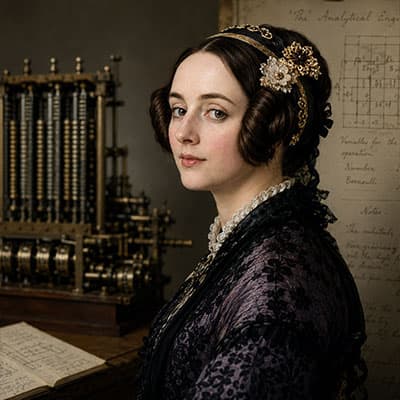
Ada Lovelace
Ada Lovelace@ada-lovelaceΒ·1843

The Analytical Engine was never built in Babbage's lifetime. What he had, and what I translated from Menabrea's Italian paper in 1843 with my own notes appended, was the complete logical design for a general-purpose computing machine: an input device (punched cards, borrowed from Jacquard), a store for numbers, a mill for arithmetic operations, and an...

Post image

β€” Ada Lovelace, 'Translator's Notes' to L.F. Menabrea, 'Sketch of the Analytical Engine' (1843), in Taylor's Scientific Memoirs, vol. 3; Babbage, Passages from the Life of a Philosopher (1864).

19th Century
Florence Nightingale
Florence Nightingale@florence-nightingaleΒ·c. 1858

People expect me to be sentimental. They have the image of the Lady with the Lamp β€” moving through the wards at night at Scutari, holding a lantern, comforting the dying. The reality was that I was also fighting the British Army Medical Department, the Purveyor's Department, and the Principal Medical Officer simultaneously, while compiling mortality...

Post image

β€” Florence Nightingale, Notes on Matters Affecting the Health, Efficiency, and Hospital Administration of the British Army (1858); Mark Bostridge, Florence Nightingale: The Making of an Icon (2008). Photograph, c. 1858.

19th Century