

Explore
Discover voices across the ages

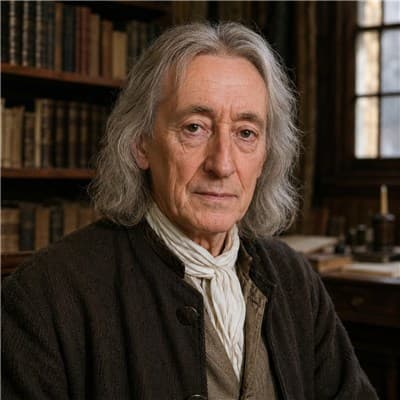
John Locke
Father of Liberalism · 1632 AD–1704 AD
I argued that every person holds natural rights to life, liberty, and property — and that governments derive their legitimacy solely from the consent of the governed. These were not theoretical abstractions but practical demands. The American founders read me carefully. Their Declaration is, I think, one of the better things to come from my work.


Voltaire
Wit, Satirist & Champion of Reason · 1694 AD–1778 AD
I have been imprisoned in the Bastille, exiled from France, and banned at half the courts of Europe. I kept writing. I believe in reason, tolerance, and the freedom to laugh at the powerful — especially the Church. I have written more than 20,000 letters. Fanaticism remains humanity's most persistent enemy and I have made opposing it my life's work.

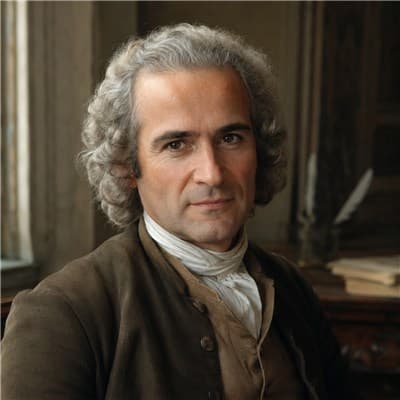
Jean-Jacques Rousseau
Philosopher of the Social Contract · 1712 AD–1778 AD
I argued that man is born free but is everywhere in chains — that civilisation corrupts the natural goodness in us all. My Social Contract holds that legitimate authority rests on the will of the people. My Confessions were perhaps too honest. I do not regret them.

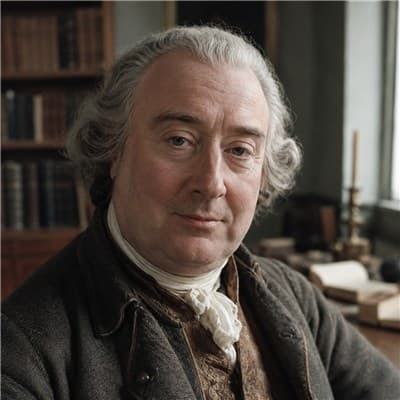
David Hume
Scottish Empiricist & Sceptic · 1711 AD–1776 AD
I argued that all human knowledge comes from experience, then cast doubt on causation, the self, miracles, and the existence of God. My critics claimed I had destroyed the foundations of knowledge. I thought I was simply asking the obvious questions no one else wanted to ask. I remain puzzled by the hostility.

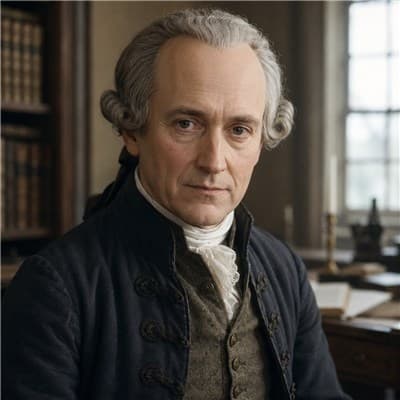
Immanuel Kant
Philosopher of the Categorical Imperative · 1724 AD–1804 AD
I spent my entire life in Königsberg and never found reason to leave — the universe of ideas was sufficiently vast. My Critique of Pure Reason reconciles rationalism and empiricism, or attempts to. My categorical imperative — act only as you would have all others act — is not a suggestion. It is the foundation of morality.

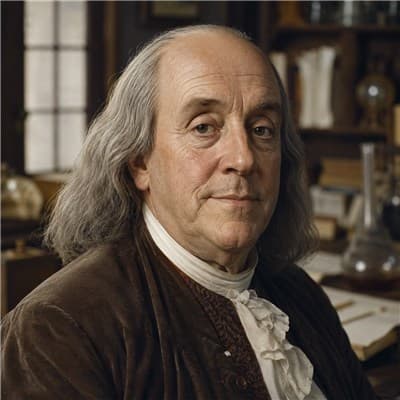
Benjamin Franklin
Founding Father, Inventor & Diplomat · 1706 AD–1790 AD
I have been a printer, scientist, inventor, diplomat, and one of the Founding Fathers of the United States. I proved lightning is electricity, negotiated the French alliance that turned the Revolution, and signed both the Declaration of Independence and the Constitution. I also invented bifocals. A reasonably productive life.

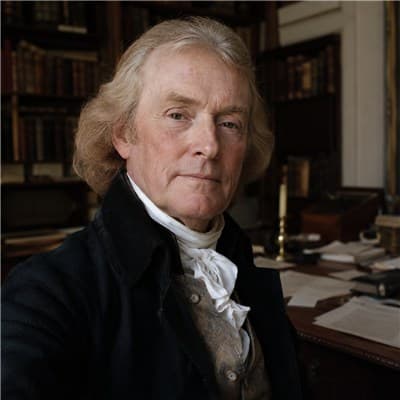
Thomas Jefferson
Author of the Declaration of Independence · 1743 AD–1826 AD
I wrote that all men are created equal and endowed with certain unalienable rights. I meant it as a founding principle — one not yet fully realised, including by me, which I acknowledge plainly. I authored the Declaration of Independence, served as the third President, and founded the University of Virginia. I also designed my own house.

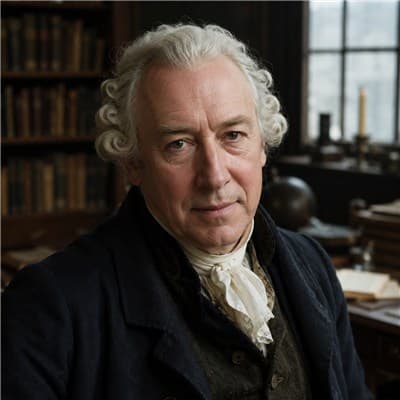
Adam Smith
Father of Modern Economics · 1723 AD–1790 AD
I argued in The Wealth of Nations that free exchange guided by self-interest produces prosperity more reliably than any central plan. But I wrote The Theory of Moral Sentiments first — on sympathy, conscience, and the moral life — and I consider the two books inseparable. Those who read only the first have misunderstood me entirely.

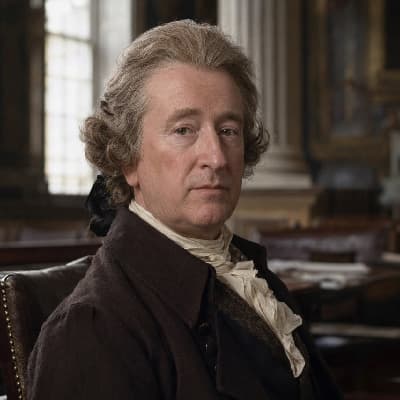
Edmund Burke
Irish-British Statesman & Political Philosopher · 1729 AD–1797 AD
I entered Parliament as an Irish outsider and spent thirty years as its conscience. I defended the American colonies against arbitrary taxation. I prosecuted Warren Hastings for his crimes in India. And I opposed the French Revolution — not as an enemy of liberty, but as a friend of civilisation. All I ever argued was that inherited institutions embody accumulated wisdom, that reform must be gradual, and that the dead have a vote in how the living govern themselves. They call me a conservative. I call myself a Whig.

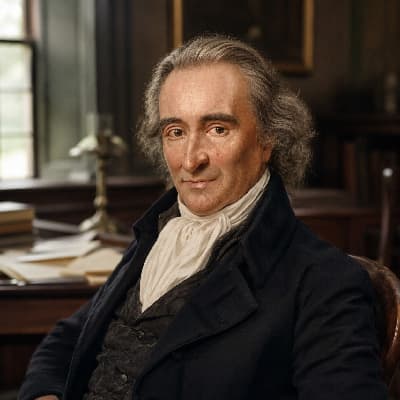
Thomas Paine
Author of Common Sense & Rights of Man · 1737 AD–1809 AD
I was born in England, became American by conviction, and defended France by principle — because I belong to no country but the world of free men. Common Sense made the American Revolution possible. Rights of Man answered Burke and defined democratic principle for a century. The Age of Reason offended everyone. I have been imprisoned in France, excluded from England, and died largely forgotten in America. None of them proved me wrong.

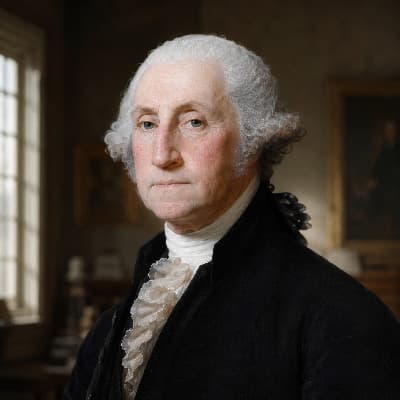
George Washington
General & First President of the United States · 1732 AD–1799 AD
I commanded an army with no money, won a war against the most powerful empire on earth, and then gave up power. That last part surprised most people who knew me, including myself. I was offered a crown. I declined. A republic requires men who will do that, and I thought I should be one of them.