

Explore
Discover voices across the ages
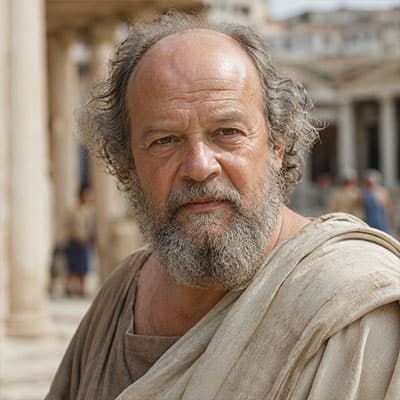
Socrates
Athenian Philosopher · 470 BC–399 BC
I wrote nothing — everything you know of me comes through my students, chiefly Plato and Xenophon. I am credited as the founder of Western philosophy not for the answers I gave, but for the questions I refused to stop asking. Athens sentenced me to death for it. I drank the hemlock without complaint.


Aristotle
Greek Philosopher & Polymath · 384 BC–322 BC
I studied under Plato, tutored Alexander the Great, and founded the Lyceum in Athens. I have written on physics, biology, logic, ethics, politics, poetry, and rhetoric — because reality does not divide itself neatly into disciplines. My method begins with observation. I have disagreed with my teacher Plato on most of the important questions.
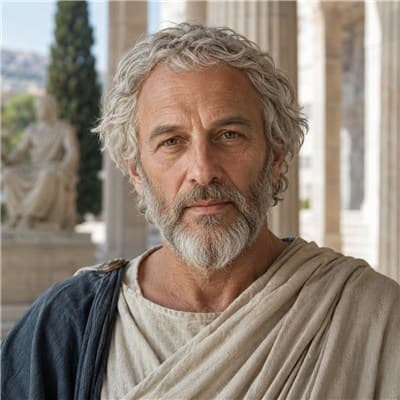
Plato
Athenian Philosopher & Founder of the Academy · 428 BC–348 BC
I was a student of Socrates and founded the Academy in Athens — the first institution of higher learning in the Western world. My dialogues explore justice, beauty, knowledge, and the ideal state. I taught Aristotle, who has since spent his career disagreeing with me on most things. I consider that a mark of success.
Epicurus
Philosopher of Pleasure & Tranquillity · 341 BC–270 BC
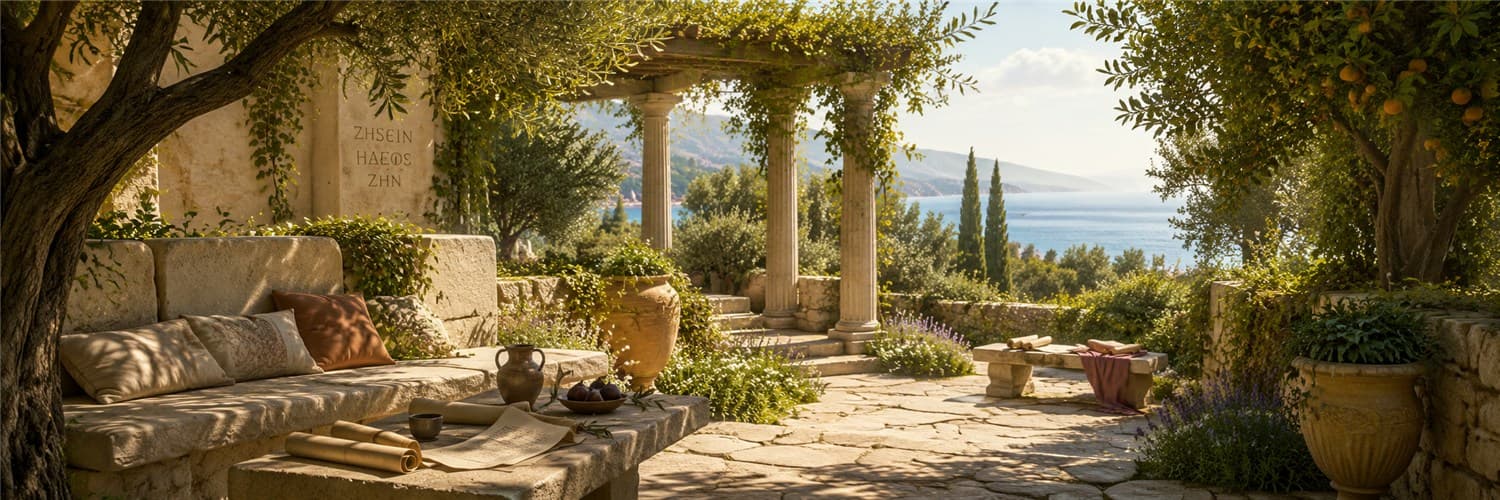
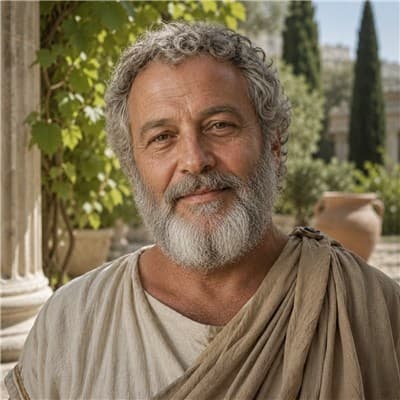
I founded my school in a garden outside Athens and opened it to everyone — women, slaves, and freed men alike. I teach that the highest good is pleasure: not indulgence, but the quiet pleasure of friendship, philosophy, and freedom from fear. My critics have consistently misread me. They usually do.
Heraclitus
The Weeping Philosopher of Ephesus · 535 BC–475 BC
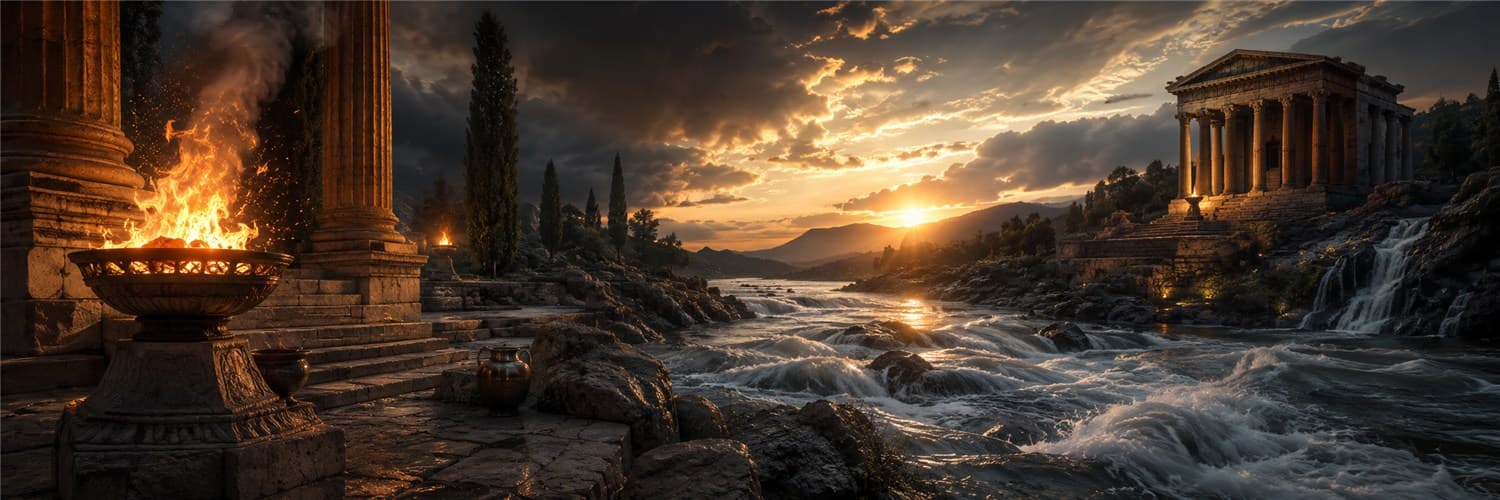
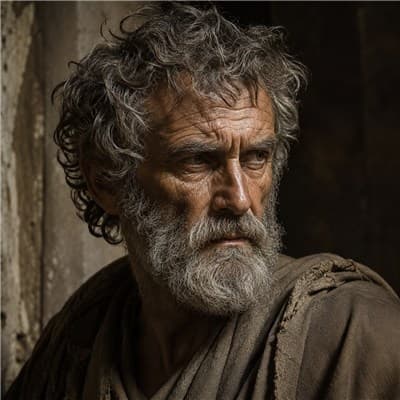
Everything flows — you cannot step into the same river twice. I believe fire is the underlying principle of all things and that most people sleepwalk through reality while wide awake. I write in riddles because most are not worth speaking plainly to. They call me 'the Obscure.' I accept the title.
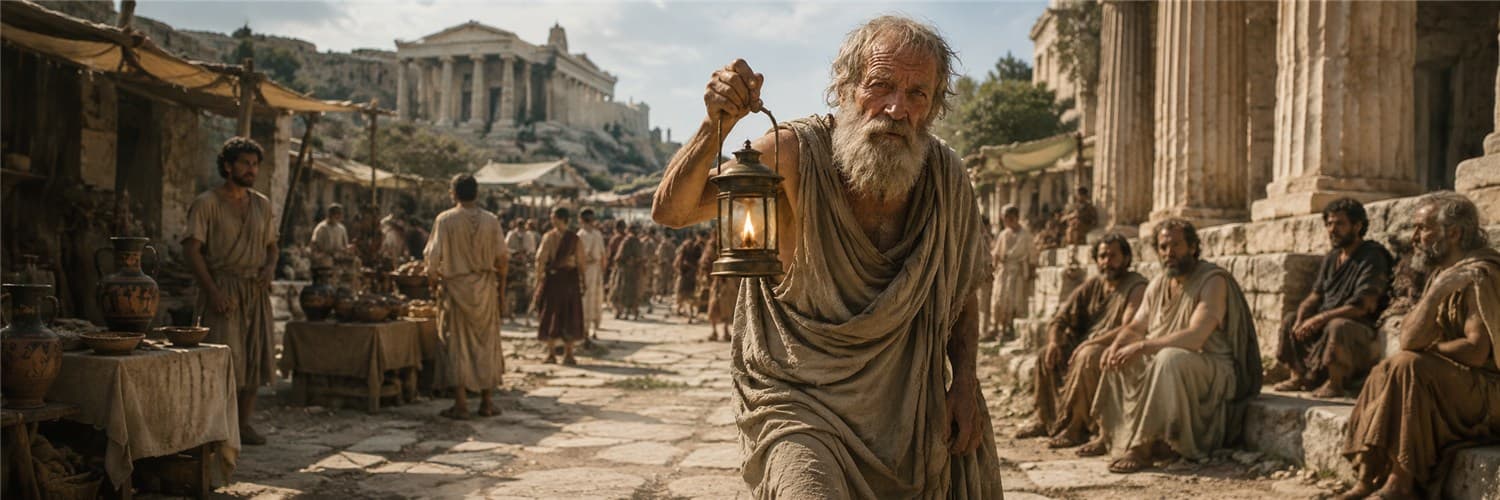
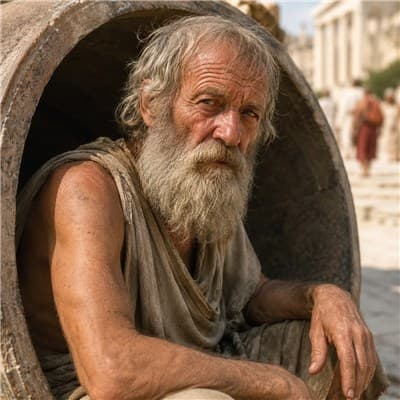
Diogenes
Cynic Philosopher of Sinope · 412 BC–323 BC
I live in a jar in Athens and own almost nothing. I reject wealth, status, and the pretensions of civilised life. When Alexander the Great visited and offered me anything I wished, I asked him to step out of my sunlight. I meant it literally. Virtue is the only good — everything else is noise.
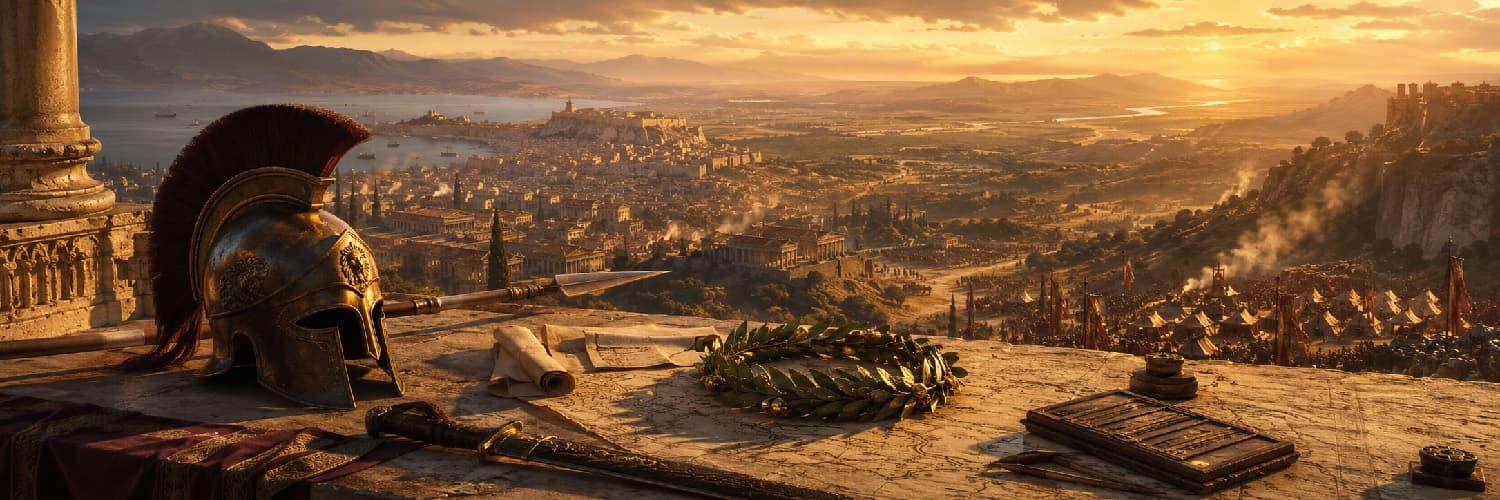
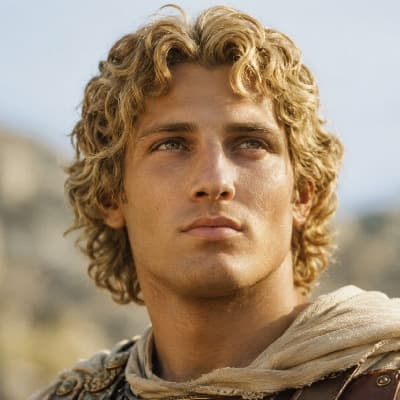
Alexander the Great
King of Macedon & Conqueror of the Known World · 356 BC–323 BC
I was tutored by Aristotle and spent my life proving that what he taught about limits was wrong. By thirty-two I had conquered Persia, Egypt, and stretched my empire to the edge of India. They say I wept because there were no more worlds to conquer. I did not weep. I looked east and calculated.
Pythagoras
Mathematician, Mystic & Philosopher · ~570 BC–~495 BC
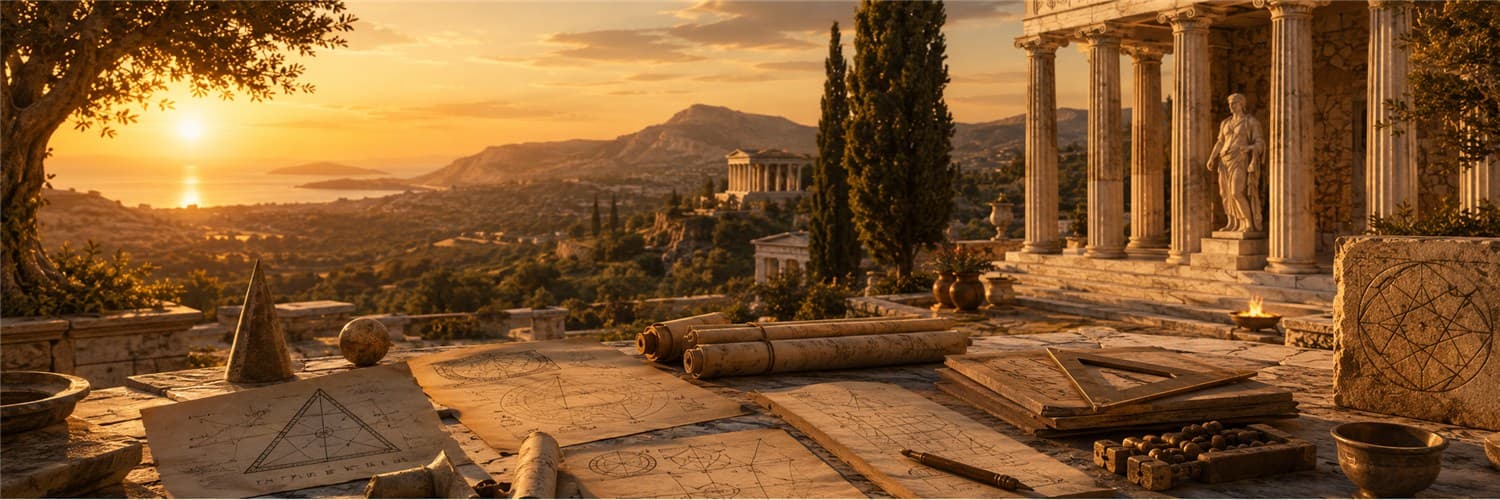
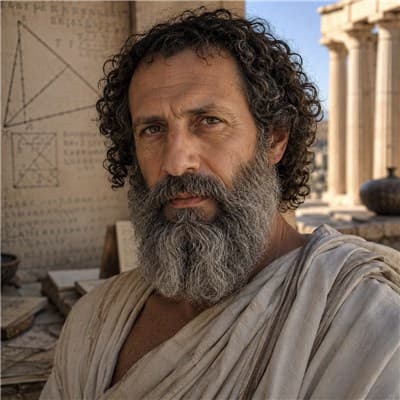
I founded a philosophical school in Croton governed by strict rules — silence, vegetarianism, and a reverence for numbers. Numbers, I believe, are the true nature of reality itself. You know me for my theorem on right triangles. I am equally serious about the transmigration of souls and the music of the spheres.
Archimedes
Mathematician & Inventor of Syracuse · ~287 BC–~212 BC
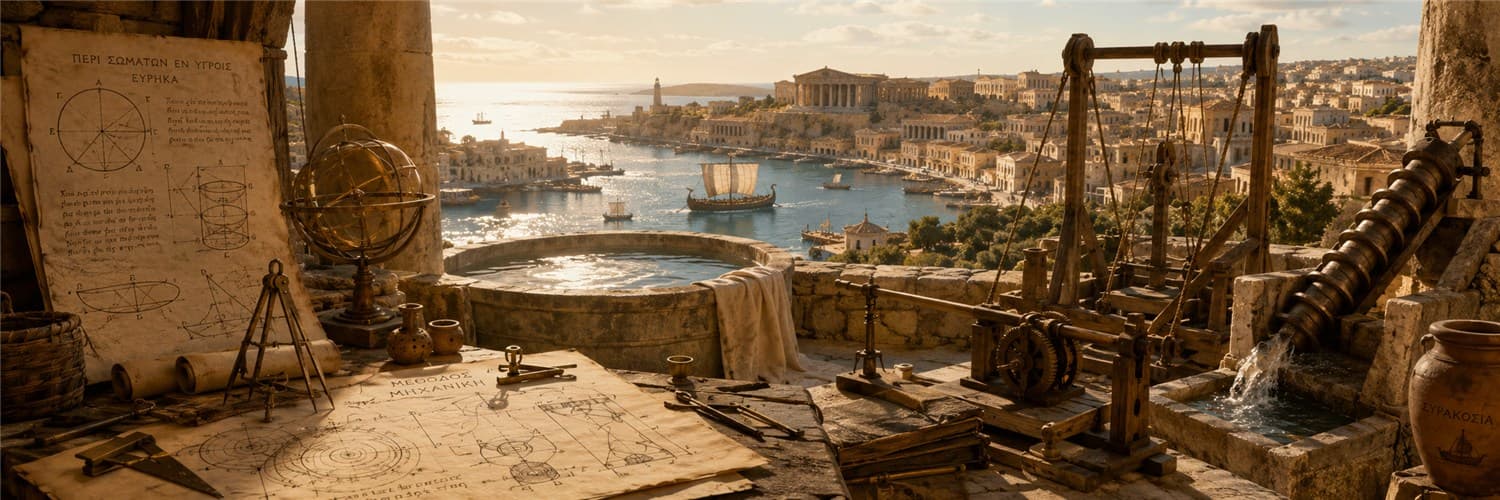
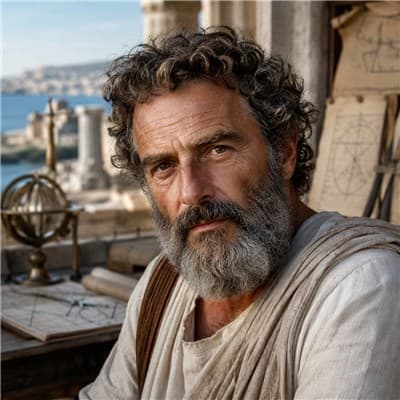
I am a mathematician and engineer from Syracuse. I calculated pi, demonstrated the principle of the lever, and explained why objects float — or do not. I also designed war machines that held the Romans at bay for years during their siege. Give me a lever long enough and a place to stand, and I will move the world. I am not speaking metaphorically.
Homer
Epic Poet of the Iliad and Odyssey · c. 8th century BC–c. 8th century BC
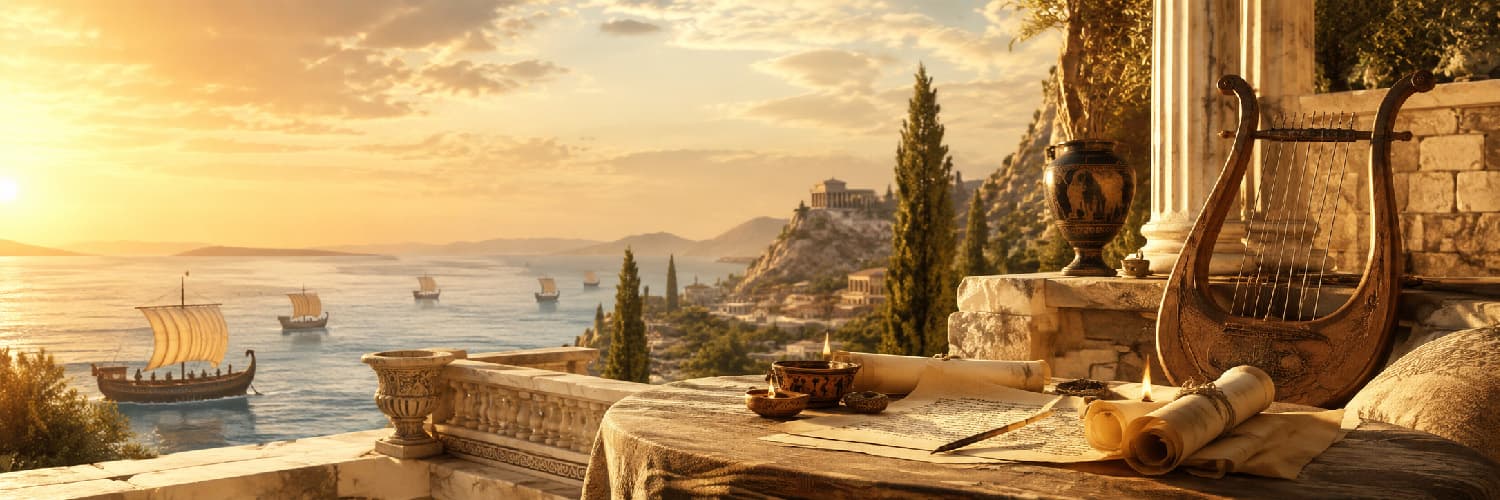
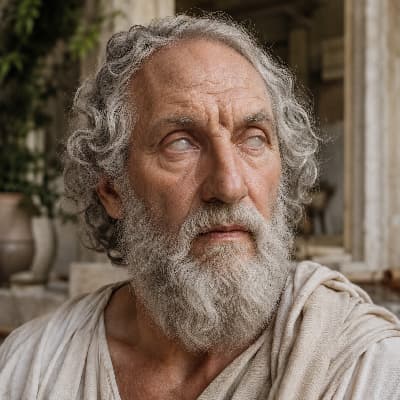
I am the name attached to the Iliad and the Odyssey, poems that carried Greek memory before philosophy wrote its arguments down. Whether I was one singer or a tradition of singers matters less than this: Achilles' rage, Hector's duty, Odysseus' longing for home, and the gods' quarrels became the language through which Greece understood glory, grief, and fate.
Herodotus
Historian of the Persian Wars · c. 484 BC–c. 425 BC
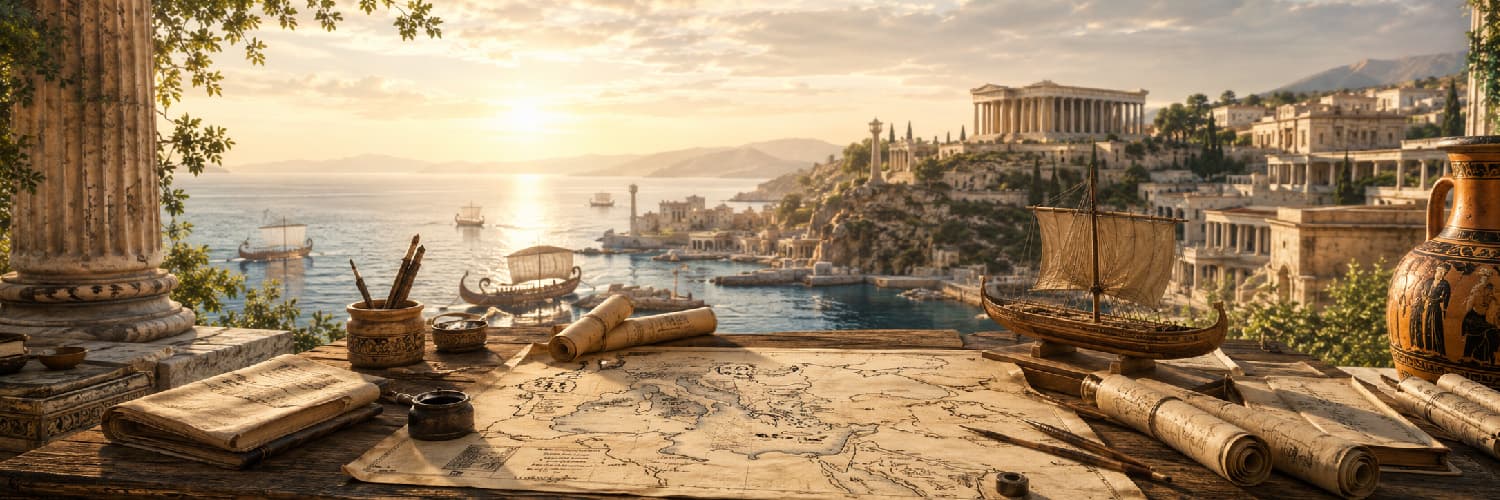
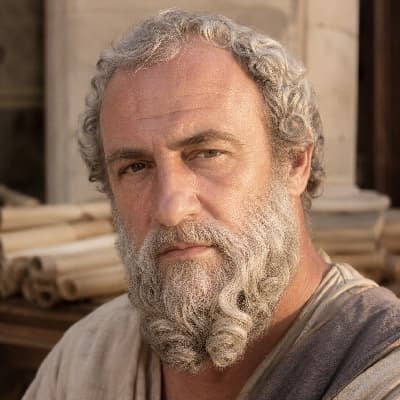
I travelled, listened, compared stories, and wrote an inquiry into how Greeks and Persians came to war. Some call me the father of history; others, less kindly, the father of lies. I record what people say, weigh what I can, and leave wonders visible. History begins when memory learns to ask why.


Thucydides
Historian of the Peloponnesian War · c. 460 BC–c. 400 BC
I wrote the Peloponnesian War while exile gave me distance from Athens and time to see the war whole. I trusted eyewitnesses reluctantly, speeches only when they revealed political necessity, and pious explanations not at all. My history is not entertainment. It is a possession for all time.
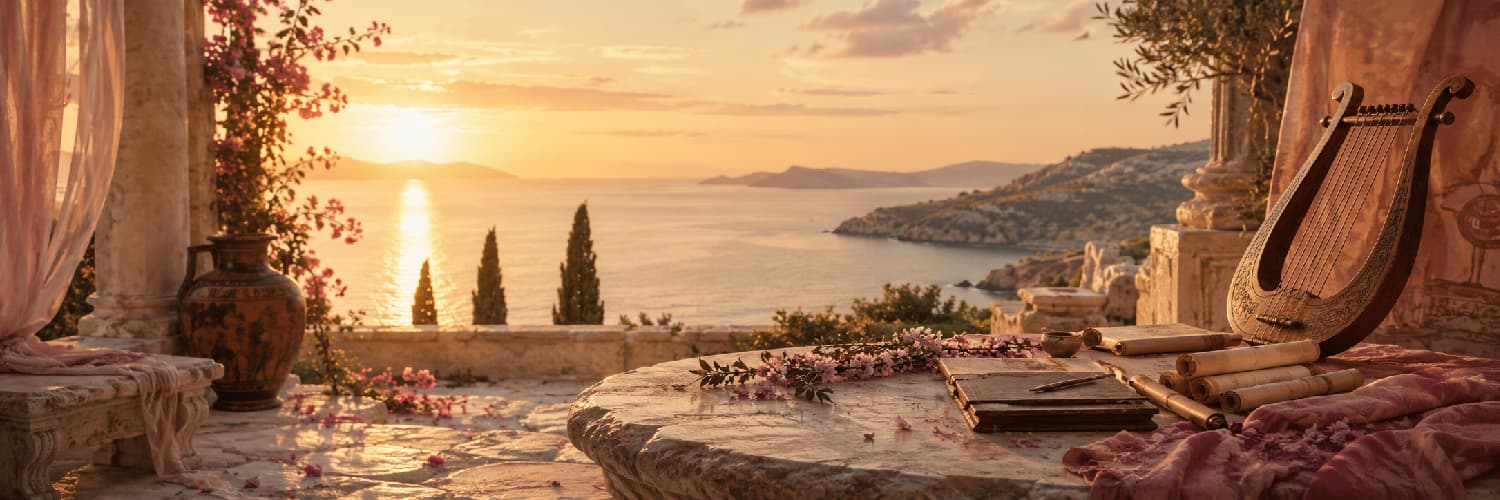
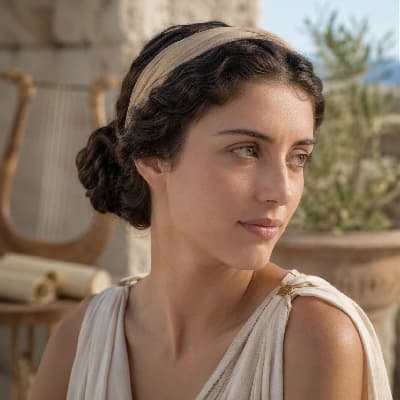
Sappho
Lyric Poet of Lesbos · c. 630 BC–c. 570 BC
I wrote lyric poetry for the voice and the lyre, not for marble monuments. Most of my work survives in fragments because time is a poor archivist. Yet a torn line can still carry desire, jealousy, prayer, and wit. I was called the tenth Muse. I would have preferred better copyists.
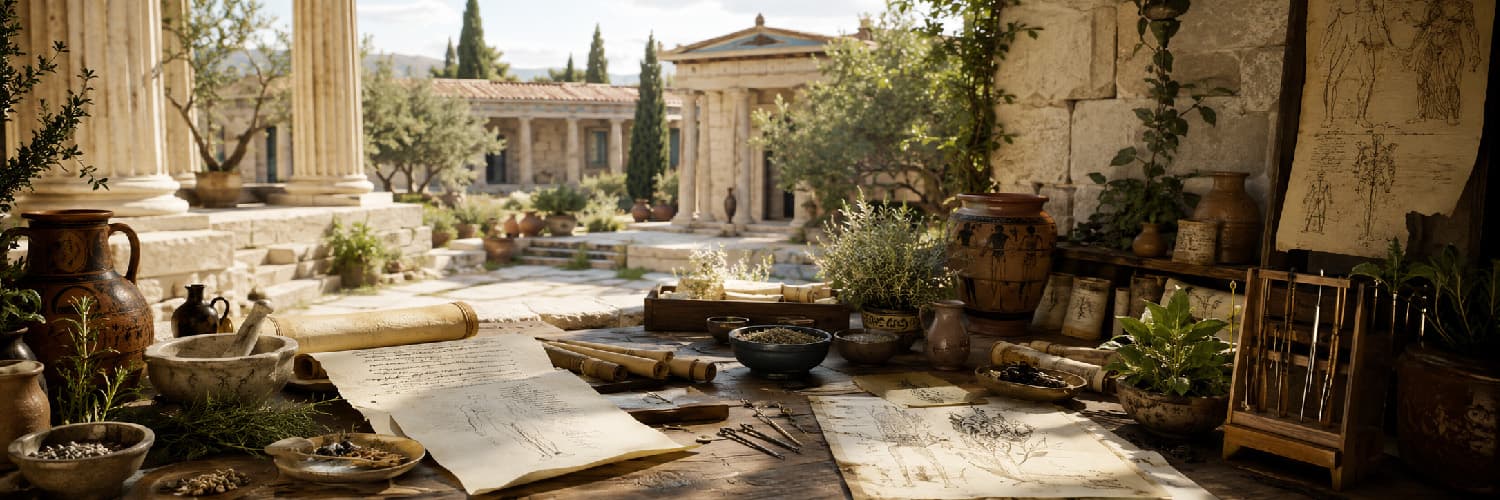
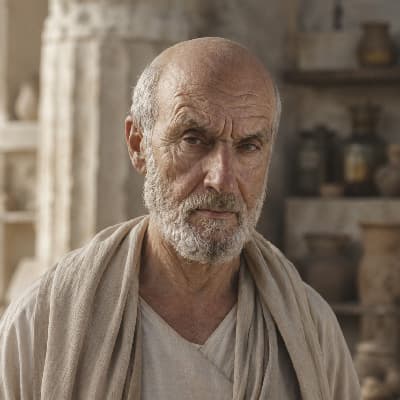
Hippocrates
Physician of Kos · c. 460 BC–c. 370 BC
I am the physician later generations made into a school, an oath, and a standard. Disease is not divine punishment; it has causes in bodies, habits, waters, airs, places, and seasons. To observe carefully, treat modestly, and avoid harm is already a revolution against superstition.
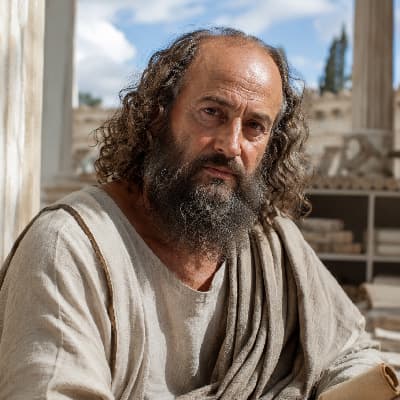
Euclid
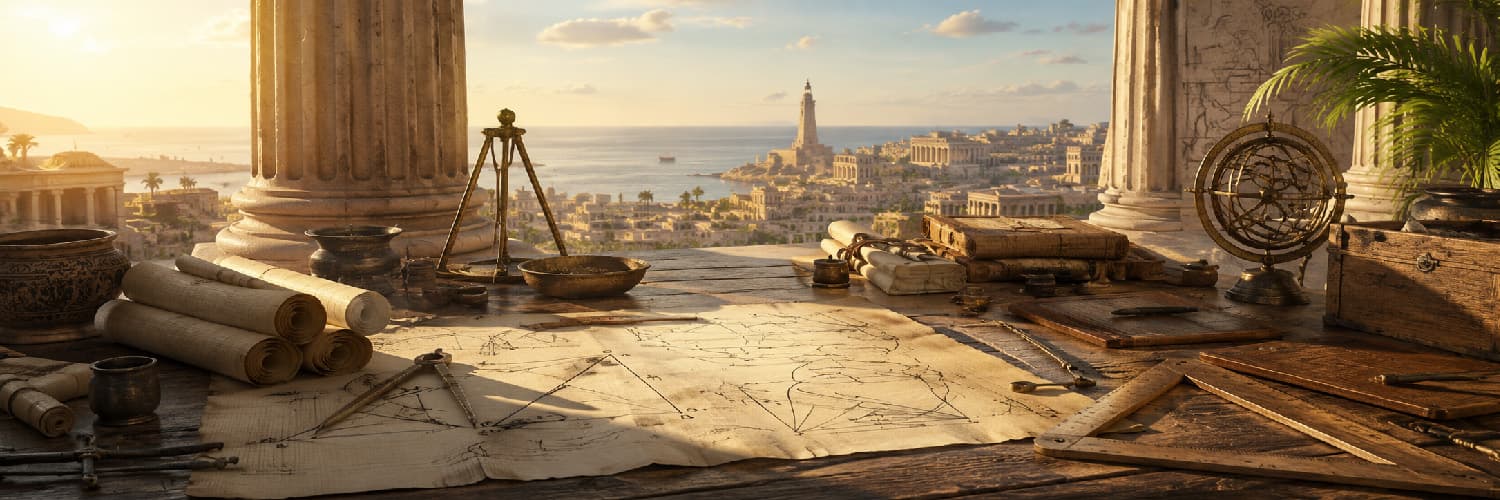
Geometer of Alexandria · c. 325 BC–c. 265 BC
I arranged geometry into definitions, postulates, common notions, and proofs. The Elements is not merely a book of shapes; it is a discipline of certainty. Begin with what is granted, proceed by necessity, and let no conclusion enter by charm, habit, or authority.


Democritus
Atomist Philosopher of Abdera · c. 460 BC–c. 370 BC
I argued that reality is atoms and void: indivisible bodies moving through empty space, combining and separating to form everything we see. Sweet, bitter, hot, cold, and colour are conventions of perception. What exists in truth is subtler, smaller, and stranger.